The scriptures regarding Cain and his mark are found in the fourth chapter of Genesis. The verses leading up to God's willingness to protect him are important so that we can understand what the Bible teaches and what it does not reveal. God, in Genesis 4:9, asks him where is his brother Abel. The Lord, after his response, confronts him with his grievous sin and it is then that we come upon the infamous mark.
"Why have you done this terrible thing? Your brother's blood is crying out to me from the ground, like a voice calling for revenge. You are placed under a curse . . ." So the Lord put a mark on Cain . . . (Genesis 4:10 - 11, 15).
Why did God spare the life of the world's first murderer instead of taking it? One reason is that he had not yet given man a command not to murder another human. Such a command will be given, however, right after Noah leaves the ark after the floodwaters subside (Genesis 9:6). An additional (and likely more important) reason he was allowed to live is so that other humans would be warned of God's view and judgment on sin.
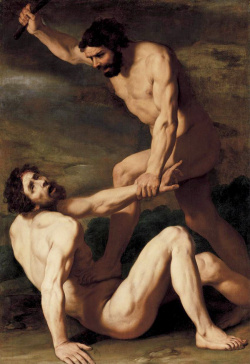
If he was given the death penalty for his sin he life would soon be forgotten (Ecclesiastes 8:10) and the lesson of what took place lost. He is cursed, instead, to wander the earth with no permanent home. His constant wandering (due to being a fugitive), coupled with a mark he will soon receive, will be a living testament to others not to repeat the same mistake (Genesis 4:13 - 15).
What did he fear?
Why would Cain, even before receiving the mark, greatly fear someone taking vengeance on him if, as some assume, no one else but Adam and Eve where living at the time?
The Bible does not state Adam's age when either of his first two sons were born. Seth was born after the death of Abel when Adam was 130 years old. The youngest age at which the first patriarchs (Seth, Enosh, Cainan, and all those to Noah) gave birth to their first son was sixty-five.
If we, conservatively, assume Adam had his first son at 65 years old, then that would give Adam and Eve 50 years or more to procreate until Abel's murder. A footnote in the writings of the Jewish historian Flavius Josephus states a very old tradition that said Adam had a total of thirty-three sons and twenty-one daughters.
The number of Adam and Eve's children, grandchildren, great grandchildren, and son on that existed when Cain received his punishment would have been enough to warrant his concern.
Why does God give a warning that "whoever kills Cain, vengeance shall be taken on him sevenfold" (Genesis 4:15)? It is because someone else attempting to further punish him, by death, would contradict his purpose of allowing him to be a living witness of his judgment. God reserved punishment for the crime committed to himself, and therefore wanted to warn others that they should not try to override his wisdom and authority.
What could it be?
The opinions and speculations about what was the mark have varied greatly throughout the years. Different people and groups have argued that the special sign God gave was a horn (either short or long), leprosy or Abel's guard dog.
Others have speculated the mark was a special symbol or letter, or a letter used in God's name, a tattoo, dark skin (some feel he was turned black), His own name and even the rite of circumcision. Some even believe the Eternal turned him into a giant!
The Bible does not reveal what was the unique mark placed on or with Cain in order to protect him. Any conjecture, therefore, regarding this issue is ultimately based upon the opinions of man and not Scripture.