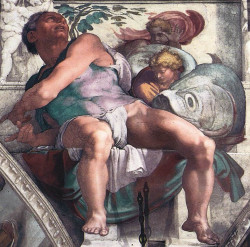
"So he put them all together in prison three days. Then Joseph said to them THE THIRD DAY, 'Do this and live, for I fear God:' (Genesis 42:17-18) "And they gave him a piece of a cake of figs and two clusters of raisins. So when he had eaten, his strength came back to him; for he had eaten no bread nor drunk water for THREE DAYS AND THREE NIGHTS." (1Samuel 30:12) "Then Esther told them to reply to Mordecai: 'Go, gather all the Jews who are present in Shushan, and fast for me; neither eat nor drink for THREE DAYS, NIGHT OR DAY. My maids and I will fast likewise. And so I will go to the king, which is against the law; and if I perish, I perish!' " (Esther 4:15-16) There is absolutely no reason to give the time period stated in these verses any meaning except their literal meaning. What authority has any man to contradict these plain words? There is no reason to take any of the passages cited in any sense except their literal sense, unless one has a theory to prove. "Now the Lord had prepared a great fish to swallow Jonah. And Jonah was in the belly of the fish THREE DAYS AND THREE NIGHTS." (Jonah 1:17)
Jonah was IN a fish for the literal period mentioned in verse 17. Even if some of the Jews counted a part of the day as a whole day, is this what JESUS meant? Did the Jews count part of a day as a whole day and a whole night? Where is the proof in the Bible? Those who promote the false teaching of a Good Friday crucifixion want us to believe that a part of a day meant a whole day and a whole night. Men who believe the Bible to be literally true dare not accept such reasoning. A day is a day The word "day" in the Bible means the interval between dawn and darkness. "God called the light Day, and the darkness He called Night. . . . " (Genesis 1:5) This is the first occurrence of the word "day" in the Bible. Jesus himself stated there were twelve hours in a day when he said in John 11, " . . . Are there not twelve hours in the day? If anyone walks in the day, he does not stumble, because he sees the light of this world." (John 11:9) Jesus states there are twelve hours of light in a day, which logically means a night has twelve hours of darkness. Can there be any higher authorities than God? The Bible defines a full day as the interval of time between two successive risings of the sun (Genesis 7:24; Job 3:16). The Hebrews reckoned it from evening to evening: " . . . at evening, from evening to evening, you shall celebrate your sabbath." (Leviticus 23:32) The twelve-hour night began at sunset and ended at sunrise. ". . . So the evening and the morning were the first day." (Genesis 1:5) The lie The Bible nowhere states that Jesus’ crucifixion was on a Friday! Because the Jewish weekly Sabbath came on Saturday, scholars ASSUME Jesus died on Friday - thus promoting a Good Friday hoax! The Bible clearly states the Jews kept OTHER Holy times besides the weekly seventh-day Sabbath. The Jews kept the annual Holy Days God had given Israel (Exodus 23:14-17, Leviticus 23, Numbers 28-29, etc.). The Bible teaches there were TWO Sabbaths between the time when Jesus entered the tomb and the moment his resurrection took place! This is the KEY to understanding the correct sequence of events of what happened to Jesus our Savior! This is another reason why the traditional teaching that Jesus died on a Friday afternoon and was resurrected on Sunday morning is FALSE! "Jesus’ statement that He would rise three days after He had died is acutely significant. According to Jewish law, to be declared legally dead, a person had to be dead for three FULL days or more. Therefore, if Jesus had risen from the dead before 3 PM on the afternoon of Nisan 17, a weekly Sabbath (Saturday), He would not have been considered legally dead. As a result, His return to life would not have been considered a true resurrection from the dead. "If He had been crucified on a Friday and restored to life on Sunday morning at sunrise (what Christianity calls Easter morning), His death WOULD NOT have been "valid" since only two nights and one day would have passed between Friday sunset and Sunday morning. In order for His death to be publicly recognized and acknowledged, it was necessary for Jesus to remain in the grave for three nights and three days before He was raised from the dead." (HBFV, Appendix J)
The Sabbath after Jesus died After sunset on a Tuesday (the day of Passover began at sunset and ended at sunset the next day) Jesus ate the Christian Passover with his disciples (Matthew 26:20, Mark 14:17, Luke 22:14-15). Jesus’ crucifixion occurs between noon and 3pm on the next day (Wednesday). He dies at 3pm. Since work was allowed on the Passover day, people used it to prepare for (which is why the Bible calls it "preparation day") the first day of the Feast of Unleavened Bread (an annual High Sabbath where no work was allowed - Leviticus 23:6-7). In the year Jesus died, 30 A.D., the first day of the Feast of Unleavened Bread began at SUNSET on Wednesday. Since there was only three hours between the time Jesus died and the start of the Feast at sunset (6 p.m.), his body was quickly taken off the cross and placed in a tomb: "Now evening was coming, and since it was a preparation (that is, the day before a Sabbath), Joseph of Arimathea, an esteemed member of the council, who himself was waiting for the kingdom of God, came; and he went in to Pilate with boldness and requested the body of Jesus. " (Mark 15:42-43, HBFV) "Therefore, because it was the Preparation Day, that the bodies should not remain on the cross on the Sabbath (for that Sabbath was a HIGH DAY), the Jews asked Pilate that their legs might be broken, and that they might be taken away . . . Joseph of Arimathea, being a disciple of Jesus, but secretly, for fear of the Jews, asked Pilate that he might take away the body of Jesus . . . Now in the place where He was crucified there was a garden, and in the garden a new tomb in which no one had yet been laid. So there they laid Jesus, because of the Jews’ Preparation Day, for the tomb was nearby. " (John 19:31, 38, 41-42, NKJV) "Now behold, there was a man named Joseph, a council member, a good and just man . . . This man went to Pilate and asked for the body of Jesus. Then he took it down, wrapped it in linen, and laid it in a tomb that was hewn out of the rock, where no one had ever lain before. That day was THE PREPARATION, and the Sabbath drew near." (Luke 23:50, 52-54, NKJV) The SECOND Sabbath after Jesus died The Bible states that after the annual Sabbath known as the Feast of Unleavened Bread had ended (on sunset Thursday), three women went to buy spices for Jesus' body. "Now when the Sabbath was past, Mary Magdalene, Mary the mother of James, and Salome bought spices, that they might come and anoint Him. " (Mark 16:1) After buying spices for Jesus' body, the women spent the rest of Friday preparing them. When the Saturday Sabbath started at sunset Friday the women rested: "Then they returned and prepared spices and fragrant oils. And they rested on the Sabbath according to the (fourth) commandment. " (Luke 23:56)
After resting Mary Magdalene and another Mary go to observe Jesus' tomb late on the weekly Sabbath: "Now late on the Sabbath, as the first day of the weeks was drawing near, Mary Magdalene and the other Mary came to observe the sepulcher." (Matthew 28:1, HBFV)
The resurrection Some Scriptures speak of Jesus' resurrection "after three days" (Mark 8:31; Matthew 27:63). Other verses say "in three days" (Matthew 26:61, 27:40; Mark 14:58, 15:29; John 2:19-20). Still others speak of "the third day" (Mark 9:31, 10:34; Matthew 16:21, 17:23, 20:19, 27:64; Luke 9:22, 18:33, 24:7, 21, 46; Acts 10:40; 1Corinthians 15:4). Do these phrases contradict each other? "When we understand Jesus statements, we find that instead of being contradictory, they reveal the exact time that he was raised from the dead. Jesus made it clear that he would be raised AFTER He had been dead for three days. The other statements, "in three days" and "on the third day," do not include the total time that he was dead but only the time that he was buried in the tomb. The Gospel accounts show that Joseph of Arimathea and Nicodemus closed the tomb just before sunset, three hours after Jesus died on the cross. Although he was in the tomb for EXACTLY three days and three nights (seventy-two hours), He was dead for a longer period than that. Thus He rose from the dead "after three days." The difference between this statement and the statements "in three days" and "on the third day" is that these two statement refer to His burial "in the heart of the earth three days and three nights." " (The Day Jesus the Christ Died by F. Coulter, Chapter 6, emphasis added)
The resurrection of Jesus from the dead took place at sunset Saturday, April 8, 30 A.D., which is seventy-two hours after he died and laid in the tomb. This fulfilled the sign of Jonah the prophet he gave in Matthew 12:38-40 and PROVED He was the TRUE Messiah to the Jews! Some who wish to believe Jesus rose from the dead at SUNRISE on a Sunday morning point to a statement made in Luke 24 by two disciples who were discussing his death as they walked toward Emmaus. Sometime during their journey they meet a "stranger" who enters into their conversation — not knowing that the stranger was actually the resurrected Christ: "Now behold, two of them were traveling that same day to a village called Emmaus, which was seven miles from Jerusalem. And they talked together of all these things which had happened. So it was, while they conversed and reasoned, that Jesus Himself drew near and went with them. But their eyes were restrained, so that they did not know Him. "And He said to them, 'What kind of conversation is this that you have with one another as you walk and are sad?' Then the one whose name was Cleopas answered and said to Him, 'Are You the only stranger in Jerusalem, and have You not known the things which happened there in these days?' And He said to them, 'What things?' "So they said to Him, 'The things concerning Jesus of Nazareth, who was a Prophet mighty in deed and word before God and all the people, and how the chief priests and our rulers delivered Him to be condemned to death, and crucified Him. But we were hoping that it was He who was going to redeem Israel. Indeed, BESIDES ALL THIS, TODAY IS THE THIRD DAY SINCE THESE THINGS HAPPENED. " (Luke 24:13-21, NKJV)
Did Jesus’ resurrection occur earlier in the day? It did not because: "Because this statement (Luke 24:21) was made on the first day of the week, many have incorrectly assumed that Jesus rose from the dead early Sunday morning. However, the Gospel accounts clearly show that Jesus had already risen from the dead before the women came to the tomb at sunrise (Luke 24:1). There is no question that Jesus was in the tomb for "three days and three nights" — beginning at sunset on Wednesday, Nisan 14, and ending at sunset on the weekly Sabbath, Nisan 17. Jesus rose at the end of three full days and three full nights, exactly as He had declared. "The problem with Luke 24:21, according to A. T. Robertson, is that the phrase "today is the third day" is an idiomatic expression — and is most difficult to translate into English (Word Pictures in the New Testament, Luke 24:21). Because the phrase is idiomatic, its actual meaning cannot be understood by a literal translation — that only serves to distort the true meaning. With this in mind, scholars and translators have studied how such idiomatic expressions were used by various writers of that era — such as the historian Josephus and others who used classical Greek. What they have discovered is that the idiom is an expression of completed time. In other words, "today is the third day" indicates "as of today, three days have already passed." Berkley’s translation, for example, renders the phrase as "three days have already passed;" (The) Moffatt Bible Translation translates the phrase as "three days ago." Both of these translations properly convey the idiom to show a period that has completed. "Based on this information, a precise translation of Luke 24:21 would be: "But besides all these things, as of today, the third day has already passed since these things took place." "Thus, Luke 24:21 in no way supports the teaching that Jesus was raised from the dead on the first day of the week at sunrise." (The Day Jesus the Christ Died, Appendix B)
The Bible simply does not teach Jesus was either crucified on a Friday or resurrected on a Sunday morning. Our Savior was dead and buried in the earth a full three days and three nights, proving for all ages that he was and is the Messiah. |