During the time of Jesus what was called Galilee by the Romans was composed primarily of the land God had given to the Israelite tribe of Naphtali. Pieces of land formerly given as an inheritance to the tribes of Zebulun, Issachar and Asher were also part of the region. Cities located within the province included Jezreel, Megiddo, Endor, Nain, Cana, Hazor, Sepphoris and Nazareth (where Jesus lived and grew up in until the time of his ministry at the age of 30).
Solomon, as a reward to David's friend King Hiram of Tyre for providing trees and other goods and services for Israel's building projects, gave him as a 'thank you' gift part of the land that would become Galilee (see 2Samuel 5:11, 1Chronicles 14:1, 1Kings 5:1 - 11, 9:10 - 13).
Hiram, however, was so displeased with what he received that he labeled the land "Cabul" (1Kings 9:13), which means "land of dissatisfaction" or "land that is good for nothing." After he gave back the gift (2Chronicles 8:2) Solomon rebuilt some of the cities in the area.
The region of Galilee was populated with Gentiles after the northern ten tribes of Israel were taken out of the land and placed in Assyria as captives. Gentiles continued to live in the land during Jesus ministry. Christ's move, around the age of thirty, from living in Nazareth to living in Capernaum where mostly non-Jews lived, fulfilled Biblical prophecy (Matthew 4:13 - 17).
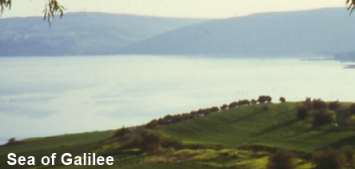
In the first century A.D. the region encompassed at least one-third of the Western part of Palestine. As such, it was the biggest of the three Roman provinces in the general area (the other two being Samaria and Judea). Its geological features included the plain of Jezreel (known as the great battlefield of Palestine), the Mount of Megiddo (from where the term Armageddon is derived), and Mount Tabor.
New Testament importance
The region of Galilee was the focal point of many events and teachings in Jesus' ministry. Jesus gave no less than nineteen out of at least thirty-two of his parables delineated in the Bible in this area.
Twenty-five of Christ's miracles were performed in the Galilee area, included his first public miracle at a Cana wedding and his last one given just after his resurrection. This area was also the place where Christ gave the message that is the foundation of true Christianity (Matthew 5 - 7, Luke 6:20 - 49).