And Jacob called to his sons and said, 'Gather yourselves together, that I may tell you what shall happen to you in the last days. Gather yourselves together and hear, sons of Jacob, and hearken to Israel your father' (Genesis 49:1 - 2, HBFV).
Jacob, inspired by God, then gave several prophecies that would affect the course of world history. His prophecies are particularly important in the End Time just before the return of Jesus Christ and the ushering in of the Messianic Age.
The Bible has specific prophecies about Israel's tribes in its prophecies about the "last days." There are, however, no nations in the modern world called "Manasseh," "Ephraim," "Assyria," and so on, yet the Bible uses those names to describe nations in End Time prophecies.
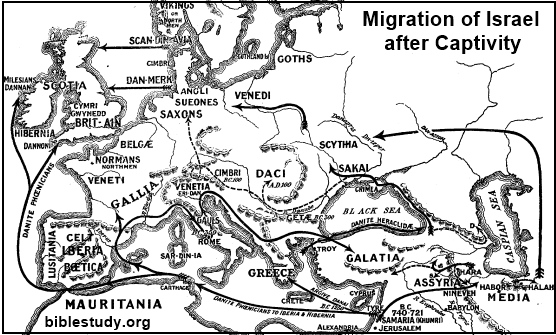
The Bible is most emphatic that the tribes will be prominent, identifiable nations just before the Second Coming and it gives us many specific clues to help locate them. Those who maintain the "lost tribes of Israel" no longer exist (or cannot be identified) are actually denying Scripture.
Lost and Found
The tribe of Joseph was subdivided into two tribes - Manasseh and Ephraim (the two sons of Joseph). They jointly received the birthright blessings from their grandfather Jacob. This division of the tribe of Joseph resulted in there being thirteen tribes of Israel.
When migrating to Europe both the Parthians and those from Scythia retained the name Saxon (which stands for Saac's or Isaac's sons) as they made the Great Britain their new home. This name, however, was also retained by the former people of Israel who remained on the European continent (for example "Saxony" in Germany).
Jacob, in the 48th chapter of Genesis, foretold the following.
Manasseh’s descendants will also become a great people. But his younger brother will be greater than he, and his descendants will become great nations (Genesis 48:19).
Jacob (Israel) foretold that the tribes of Manasseh and Ephraim would receive Genesis 35:11's birthright blessing. The scriptures prophesied that Ephraim's descendants (the younger of the two brothers) would become many great nations while those who descended from Manasseh would eventually be one powerful nation.
Today's descendants of Joseph's "lost" son Manasseh live in America. The descendants of Ephraim are Great Britain and her Saxon Commonwealth nations (Canada, Australia, New Zealand, etc.). These countries have fulfilled the End Time prophecies concerning the tribes of Israel.