Notice the next verse: "Six days shall work be done: but the seventh day [is] THE SABBATH OF REST, AN HOLY CONVOCATION; ye shall do no work [therein]: it [is] the Sabbath of the LORD in all your dwellings." (Leviticus 23:3)
Clearly, the weekly Sabbath is one of God's holy convocations, and it is a commanded assembly. In verse 4 the statement from verse 2 is repeated, in order to also apply it to the annual Sabbath days. "These [are] the feasts of the LORD, [even] HOLY CONVOCATIONS, which ye shall proclaim in their seasons." (Leviticus 23:4)
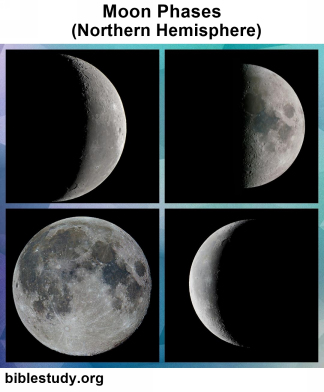
The rest of this chapter discusses the Passover, the three annual Feasts and the seven annual Holy Days. Thus, Leviticus chapter 23 makes very clear that ALL the days which God wants us to observe are: the weekly Sabbath day, the Passover (today only for baptized believers), the three annual Feasts (Seven Days of Unleavened Bread, Pentecost, and Seven Days of Tabernacles), and the seven annual Holy Days (First Day of Unleavened Bread, Seventh Day of Unleavened Bread, Pentecost, Trumpets, Atonement, First Day of the Feast of Tabernacles, Last Great Day). Pentecost is both a Feast and a Holy Day. Tabernacles is a Feast of seven days, of which the first day is also a Holy Day. Unleavened Bread is a Feast for seven days, where the first and the seventh days are both also Holy Days. But nowhere in the Bible is there a command from God that we in this present age are to observe new moons! There is no such command and that is why articles which assert that we are to observe new moons today are never able to quote a specific command from God. New moons simply don't feature amongst the commanded assemblies of God. Leviticus Chapter 23 is the clearest and strongest proof for the days which God has ordained for us to observe in this present age! There are no others! Let's look at the hypothetical matter of observing New Moons as "a required observance" from a practical point of view, in the context of the world in which we today live. Trying to Observe New Moons in the Real World WHEN would we observe new moons: based on when the new moons occur over Jerusalem, or based on when they occur locally at whatever location on Earth where we may happen to be? For example, the weekly Sabbath is observed based on the time at which the local sunset occurs. But the annual Sabbath days are typically observed based on when the new moon over Jerusalem occurs. So would we observe new moons "as they come to us" . . . with the result that people in different parts of the world would observe the new moons on different days of the Roman calendar? Or would all of us around the world observe new moons based on when they occur in Jerusalem? The Day of Trumpets is a new moon day. So IF we were to observe new moons based on when they occur in our locality, then we would end up keeping the Day of Trumpets (and therefore also the Feast of Tabernacles) on different days from other people in different areas of the world. Or would we observe the days of the actual invisible new moon conjunctions as our "new mondays"? A discussion of "observing new moons" is unavoidably tied to observing God’s Feasts and Holy Days. This is because the Day of Trumpets is a new moon day. Therefore, if people were to "observe new moons" as they come to them in their particular part of the world, THEN it would mean that those people would also have to observe the annual Feasts and Holy Days on different days from when people in some other areas would be observing the Feasts and the Holy Days. So for a start the observance of new moons can easily have a very divisive effect, with people wanting to keep the new moons in their particular areas. To support their argument for observing new moons in some way, people will often refer to various Scriptures that happen to mention new moons. New Moons in Scripture "And the LORD spake unto Moses in the wilderness of Sinai, in the tabernacle of the congregation, on the first [day] of the second month, in the second year after they were come out of the land of Egypt, saying . . . " (Numbers 1:1, AV)
Numbers 1:1 happened to be in the first day of the second month, when God instructed Moses to number all the males above age 20 years. So does this show Israel "observing new moons"? No, not at all. The numbering was a regular job that could be done on any day that wasn't a Sabbath. "And the children of the captivity did so. And Ezra the priest, [with] certain chief of the fathers, after the house of their fathers, and all of them by [their] names, were separated, and sat down IN THE FIRST DAY of the tenth month to examine the matter. And they made an end with all the men that had taken strange wives by the first day of the first month." (Ezra 10:16-17, AV)
Ezra 10:16-17 shows that on the first day of the tenth month they sat down to sort out this matter where some Jews has racially intermarried. They were coming to grips with a problem their community faced. But what has that got to do with "observing" a new moon? Again, nothing at all! Did they only come to grips with problems like this on the first day of each month? Obviously not! "And David said unto Jonathan, Behold, to MORROW [IS] THE NEW MOON, and I should not fail to sit with the king at meat: but let me go, that I may hide myself in the field unto the third [day] at even." (1 Samuel 20:5 AV) "Then Jonathan said to David, TOMORROW [IS] THE NEW MOON: and thou shalt be missed, because thy seat will be empty." (1 Samuel 20:18, AV) "So David hid himself in the field: and When The New Moon Was Come, The King Sat Him Down To Eat Meat." (1 Samuel 20:24, AV)
1 Samuel 20 verses 5, 18 and 24 show that King Saul had special meals or banquets on the days of the new moons. I know some people who go out for a special dinner every Wednesday. If a king decides to have a special meal every new moon, what does that prove? NOTHING! Is there anything else for which we appeal to King Saul as an example and as a justification for what we might do? When we look to King Saul’s life and conduct: is he supposed to be an example of what we are to do,or is he an example of what we should not do? Why is there no record of righteous King David ever having some kind of "do" on the new moons? After all, David is the one we should emulate, rather than Saul, right? Furthermore, where does God say that on the new moon kings should have special meals, national leaders should address major problems, and those of military service age should be mustered? Nowhere! The new moons are not at all like Sabbath days! The very word "Sabbath" is an intensive form of the Hebrew word for "REST"! Any day that is NOT "a rest" is simply NOT "like the Sabbath"! And new moons are emphatically not at all like Sabbath days. Would God want a king to organize a banquet for a Sabbath day? Certainly not! So if a king does have a banquet on a new moon day, then this illustrates that the new monday is different from a Sabbath day. Sometimes people quote Scriptures which refer to the millennium, and which also mention new moons. That's fine ... but that still is not the same as clear instructions from God for this present age. This approach is nothing more than reasoning that tries to INFER instructions for us today from these references about the millennium. But such inferences are not justified. The point to consider is this: since without doubt new moons were important to Israel in Old Testament times, why is there not a single command to actually 'observe' them anywhere in the Old Testament? People did, and still do, many things which are not commanded. Some of these things certainly have some merit. But the observance of days is not something God expects us to just 'infer!' Why New Moons Were Important In Biblical times It is not questioned that new moons featured prominently in the Old Testament, and even in the New Testament. They did feature prominently. Why? Today, we are not likely to lose our calendar. If you go to bed on Tuesday, February 13th, then you are not likely to lose track of the date overnight, and be unsure the next morning what day it is. Newspapers, radio programs and TV shows frequently remind us of the date and the day of the week. Our day and date digital watches make sure we never lose track. In our societies today there are MANY different bodies and organizations which help us to keep track of time and of the date. But in biblical times this was not so. People didn't have pocket diaries to remind them of the date. They didn't listen to radio and TV programs, which told them this information. Faithful observance of each new moon (i.e. taking note of it) ensured that the calendar would never become corrupted. The preservation of the calendar depended on the correct identification of each new moon. To people in biblical times new moons were what diaries are to us ... reminders of exactly where we are time-wise in the year. When Greeks and other nationalities came into the church during Roman times, how would they have known WHEN to observe the Holy Days? They couldn't buy a calendar. And the Romans hadn't set up their calendar to make it easy to observe God's Holy Days. Without observing (taking note of) the new moons, such Christians in New Testament times would not have had any idea when to keep the Holy Days. But the Romans would have scorned people who kept track of new moons, just so that they could be sure their religious observances were on the right days. So the fact that Paul mentioned in Colossians 2:16 that the Colossians should not be concerned if people criticized them for the new moons (however they observed them is not mentioned by Paul) is fine. These Colossians needed to keep a diligent track of the new moons, since no one else in their society was going to do that for them. But this verse does not contain a command to observe new moons. It doesn't contain a command for keeping the Sabbath Days and the Holy Days either ... but there certainly are other scriptures which clearly explain this. But as far as new moons are concerned, there simply are no "other Scriptures" to explain how one should possibly observe them. To keep track of the new moons in Biblical times was a way of keeping an accurate track of the passage of time. It was absolutely essential for keeping track of dates IF one wanted to know when the seventh new moon of the year (i.e. the Day of Trumpets), as well as all the other Holy Days, would occur. So, to summarize:
- There is NO COMMAND anywhere in the Bible to observe new moons in a religious manner.
- There are NO INSTRUCTIONS or guidelines on how new moons should be observed ... what are we actually supposed to do on them?
- Leviticus chapter 23 carefully lists ALL the days in the year God expects us to observe in a religious manner. New moons simply don't feature!
- The observance of new moons in biblical times is very understandable. It was the only way people could keep an accurate track of the passage of time. Carefully taking note of new moons was the equivalent of people having a watch which also displays the date and the day of the week. It was their equivalent of a diary.
- Trying to observe new moons based on when they are first visible in our particular location on earth has extremely divisive implications. It would mean that we would also have to observe the Day of Trumpets and the Feast of Tabernacles, etc. on different days from people in other parts of the world, who are a part of the same church we are a part of.
- Inferences from references to new moons during the millennium are also not clear indications for what we today should be doing. We understand that there will be cataclysmic events in the heavens when Jesus Christ returns. I personally suspect, though I can’t prove it, that God will restore the perfect months (exactly 30 days each)and the perfect years (exactly 360 days each) at the time of Christ’s return.
So if people then, during the millennium, observe new moons, the conditions will be different. Every month will always start with a new moon. There will never be any adjustments needed.It will be the perfect reign of Jesus Christ who has all the power of this universe at his disposal. But for this present age God has not indicated anywhere in the Bible that we should be observing new moons in some way.
|