The scripture in question is in verses 45 and 46 of Matthew 27.
Now from the sixth hour darkness fell upon all the land until the ninth hour. About the ninth hour Jesus cried out with a loud voice, saying, 'Eli, Eli, lama sabachthani?' that is, 'My God, My God, why have You forsaken Me?' (Matthew 27:45 - 46, NASB)
The English words ELI ELI (Strong's Concordance Number #G2241) in their literal meaning in the Greek language are "God, God." The meaning of the word LAMA (Strong's Concordance Number #G2982) is "Why."
Lastly, the exact meaning of the word SABACHTHANI (Strong's Concordance Number #G4518) is "You have left (forsaken, abandoned) me."
Strong's says that these Greek words are transliterations of Hebrew and Aramaic words. Transliteration is the attempt to make a word sound the same in another language.
For the verse in question, the New International Version (NIV) has "Eloi Eloi lama sabachthani." The King James Version (KJV), New King James Version (NKJV), New American Standard (NASB) and the Holy Bible a Faithful Version render the phrase as "Eli Eli lama sabachthani." The NIV is the only popular Bible translation that says the first two words Jesus cried out are "Eloi Eloi."
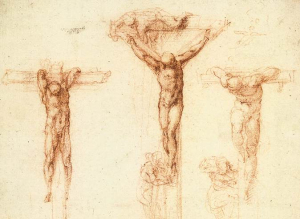
This phrase by Jesus is a quote taken from the book of Psalms, chapter 22.
My God, my God, why have you forsaken me? Why are you so far from saving me, so far from the words of my groaning? O my God, I cry out by day, but you do not answer, by night, and am not silent (Psalm 22:1 - 2, NIV).
Calling for Elijah?
Some in the crowd who heard Jesus cry out "Eli Eli . . ." from the cross thought he was calling on Elijah. Sadly, even those Jews who thought Jesus was crying out for Elijah, had no compassion for him, but used what they thought they heard to taunt him.
And some of those who were standing there heard and said, "This one is calling for Elijah." And immediately one of them ran and, taking a sponge, filled it with vinegar and put it on a stick, and gave it to Him to drink. But the rest said, "Let Him alone! Let us see if Elijah comes to save Him" (Matthew 27:47 - 49, HBFV).
And after hearing it, some of those who were standing by said, "Look, He is calling for Elijah." Then one ran and filled a sponge with vinegar, and after putting it on a stick gave it to Him to drink, saying, "Let Him be. Let us see if Elijah comes to take Him down . . ." (Mark 15:35 - 36, HBFV).
Soon after Jesus spoke the words in Matthew 27, his perfect sacrifice for the sins of the world complete, he cries his last words.
Then Jesus, crying with a loud voice, said, 'Father, into your hands I commend my spirit.' Having said this, he breathed his last (Luke 23:46, NRSV).