Although the arrangement of some numbers is obvious, others are not and require in-depth Bible study in order to discover them. The patterns found do not exist by random chance but by design. Each one has a particular symbolism attached to it by our Creator.
Research has uncovered patterns in certain original language words and phrases that reveal a hidden meaning behind the Biblical text. This discovery offers additional proof that God inspired every word used in the book that boldly proclaims to reveal His will, plan, and purpose for man. The Eternal challenges us through Isaiah that He alone is Creator.
"To whom then will you compare Me, or who is My equal?" says the Holy One. Lift up your eyes on high, and behold, Who has created these things, Who brings out their host by number?
"He calls them all by names by the greatness of His might, for He is strong in power; not one fails." (Isaiah 40:25 - 26, HBFV).
A Silent Witness
The awesome complexity of the earth itself, as well as the infinite vastness of the universe (which man cannot even begin to comprehend), are silent witnesses of the existence and wisdom of a Master Creator. God designed and created the universe based on mathematical laws and numbers, principles that continue to govern the entire creation.
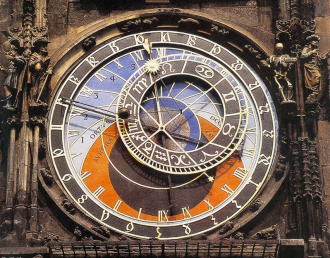
Indeed, God has wonderfully revealed Himself through His creation (Romans 1:20). Though the scientific community has discovered several of these immutable laws, men actually know little to nothing about God’s limitless universe.
They Are Everywhere!
The role of numbers in our lives is so numerous and pervasive that it is easy to take them for granted. Whether we like it or not, they are everywhere!
"Chances are you were woken up this morning by an alarm so you could get to work at or before a specific time. Your cell phone is assigned its own specific number and, like all electronic devices, its functioning is based on manipulating numbers.
"The timing and placement of traffic lights on your way to work would have been mathematically designed to maximize efficiency, despite appearances to the contrary. Every man-made object will have been designed with numbers in mind . . .
"As Pythagoras once said, numbers rule the universe. From the bizarre complexity of economics and statistics to the words and expressions we use every day, numbers are an inescapable influence on the world - even for the least mathematically inclined." (Easy as Pi, Introduction).
The Ultimate Beautiful Mind
Just as God employed mathematical laws to create everything, He used numerals in the design of His word. The Scriptures exhibit a numerical design that can only be explained by the direct inspiration of a Creator.
Edward F. Vallowe, in his book entitled "Biblical Mathematics," writes the following.
"Only to the students of the Word, those to whom God's Spirit has given spiritual insight, will the code be plain. God is 'The Great Geometrician' and does everything after a plan by number, weight, and measure.
"If God is the Author of the Scriptures and the Creator of the Universe (and He is) then the Words of God and the Works of God should and will harmonize."
Imagine what the Scriptures would be like without the direct inspiration of a single Author!
"[The] various writers of the different books, men who lived in different ages, and most of whom never saw the others, would have crossed up each other had they not all been guided by a master mind, One, Who never makes a mistake, and Whose knowledge and wisdom comprehend the events of all time.
"The precision with which the Bible numbers all fall into their places cannot be accounted for except by the supernatural power and wisdom of a God Who is infinite" (Ibid., page 20).

From the time it was first begun to around 95 A.D., some forty key writers were involved in compiling the Scriptures. A single author would have to be a genius to develop a numerical design that applies to the entire book.
The odds would be astronomical to have forty distinct authors, writing over a period of nearly three thousand eight hundred years, consistently following a complex numerical pattern. The task would be virtually impossible without the inspiration of an almighty God.
An Ancient Practice
The use of alphabetic letters to symbolize numbers is an old practice.
"Ever since the invention of alphabetic writing by the Phoenicians (or at least, by the northwestern Semitic people) in the second millennium BCE, letters have been used for numbers.
"The simplicity and ingenuity of the alphabetic system led to its becoming the most widespread form of writing, and the Phoenician scheme is at the root of nearly every alphabet in the world today, from Hebrew to Arabic . . .
"Given their alphabets, the Greeks, the Jews, the Arabs and many other peoples thought of writing numbers by using letters. The system consists of attributing numerical values from 1 to 9, then in tens from 10 to 90, then in hundreds, etc. to the letters in their original Phoenician order . . ." (The Universal History of Numbers, by G. Ifrah and D. Bello, page xxi).
Numeric Values
of Greek Letters
Α α
Alpha
1 | Η η Eta 8 |
Ξ ξ Xi 60 |
Υ υ Upsilon 400 |
Β β Beta 2 | Θ θ Theta 9 |
Ο ο Omicron 70 | Φ φ Phi 500 |
Γ γ Gamma 3 | Ι ι Iota 10 | Π π Pi 80 | Χ χ Chi 600 |
Δ δ Delta 4 | Κ κ Kappa 20 | ϟʹ Koppa 90 | Ψ ψ Psi 700 |
Ε ε Epsilon 5 | Λ λ Lambda 30 | Ρ ρ Rho 100 | Ω ω Omega 800 |
ϛʹ Digamma 6 | Μ μ Mu 40 | Σ σ Sigma 200 | ϡʹ Sampi 900 |
Ζ ζ Zeta 7 | Ν ν Nu 50 | Τ τ Tau 300 |
Definitions
For the sake of this series a few definitions are needed. Numerology is the general study of numbers. Biblical numerology is the study of how they are used in Scripture and what they reveal about God, his character and will, etc.
Twelve, for example, is commonly used to denote our Creator's establishment of a foundation or to show his perfect authority like the twelve tribes of Israel, the twelve apostles, the twelve Minor Prophets and so on.
Gematria, another subset of numerology, looks at the Hebrew letters of a word and their corresponding numerical values for possible patterns and meanings. The Greek version of Gematria is called Isopsephy. According to The Universal History of Numbers, the Greeks only adopted the practice of speculating on the meaning of a word through the numerical value of its letters after they came in contact with Jewish culture (chapter 20).
Frequency
It is interesting to note that, on average, one in every five scriptural verses contains a number. What these frequently used numerics mean reveals the mind of God and the divine design of His revelation to man.
It can easily be shown the supernatural design in the use of numbers, both in the works of God and in the Word of God. This series will primarily focus on their spiritual significance. We propose to take them in order, and to give under each not merely lists of passages or things, but to, where possible, explain their significance and illustrate their meaning.