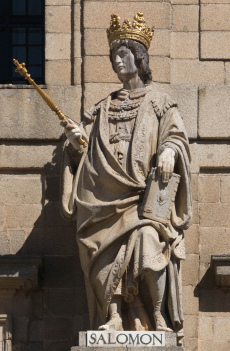
In regard to who wrote Proverbs, it is fairly certain that King Solomon wrote chapters 1 to 29. A man named Agur likely wrote Chapter 30 while the last chapter was penned by King Lemuel.
We are told in the first chapter of Proverbs that its sayings were written down so that others could gain from them wisdom, discipline, words of insight, prudence, discretion and knowledge. Those who are already wise will be able to add to their wisdom.
Some of the main topics of the book of Proverbs are comparisons between man's and God's way of living, sin, gaining wisdom, fear of the Eternal, self-control, proper use of riches, training children, honesty, helpfulness, diligence, laziness, health and alcohol use, plus several others. The verses found in Proverbs can be divided up into at least seven main sections or topical areas.
The first section of Proverbs, which runs from 1:7 to 9:18, discusses fearing God as the beginning of understanding. Section 2, which runs from 10:1 to 22:16, focuses on the wise sayings of Solomon. Section 3, composed of verses from 22:17 to 24:22, has words of the wise.
Section 4, from 24:23 to verse 34 of Proverbs, has more statements from those considered wise. Section 5, from 25:1 to 29:27, contains Solomon's wise words copied down by those who served King Hezekiah.
Section 6, which contains the entire thirtieth chapter, showcases the wisdom of Agur. The final section, composed of the last chapter of this book, highlights the wise words from King Lemuel regarding a virtuous wife.
Why Read It?
There are several excellent reasons why a person should read and study this fascinating book.
Proverbs was written to lead a person to comprehend what it means to reverence God and find knowledge. It will also strengthen a person's faith in him and give them hope, for he promises ultimate victory to the righteous. Lastly, reading these words of wisdom will impart a deeper understanding of what is right and good.
Then you shall understand the fear of the Lord and find the knowledge of God.
For the Lord gives wisdom; out of His mouth comes knowledge and understanding.He lays up sound wisdom for the righteous; He is a shield to those who walk uprightly. He keeps the paths of right judgment and preserves the way of His saints. Then you shall understand righteousness and judgment and equity, every good path. (Proverbs 2:5 - 9, HBFV throughout).
Consequences for Rejecting Wisdom
Solomon warns that those who refuse to pursue and believe Godly wisdom will suffer the consequences of their folly.
But you have despised all my (wisdom's) counsel and would have none of my reproof. I also will laugh at your calamity; I will mock when your fear comes;
When your calamity comes like a storm, and your destruction comes like a whirlwind, when trouble and pain come upon you, then they shall call upon me, but I will not answer; they shall seek me early, but they shall not find me . . .
Therefore they shall eat the fruit of their own way and be filled with their own devices. For the waywardness of the simple shall slay them, and the complacency of fools destroys them. (Proverbs 1:25 - 28, 31 - 32).
Those who choose to reject God and do not repent of their sinful ways will find themselves receiving the ultimate penalty.
Those who leave the paths of uprightness to walk in the ways of darkness, who rejoice to do evil and delight in the perversities of the wicked, whose ways are crooked, and are devious in their paths . . .
But the wicked shall be cut off from the earth, and the transgressors shall be rooted out of it. (Proverbs 2:13 - 15, 22).
All of the above, and more, is what happens when the Proverbs are not heeded or taken seriously!