Description of Gem
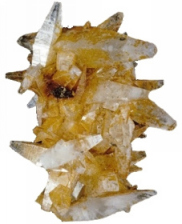
Chrysolite gems can be yellow-green, yellow, or golden in color. Pliny the Elder, a Roman nobleman in the first century A.D., describes the gem as a, "transparent stone with a refulgence like that of gold."
According to Pliny, the most valuable chrysolite stones were those that, "when placed by the side of gold, impart to it a sort of whitish hue, and so give it the appearance of silver." (International Standard Bible Encyclopedia on precious stones).
Sources
Modern sources of chrysolite include Pakistan, Myanmar, China, Egypt, and the state of Arizona in the U.S.
How Hard Is it?
Chrysolites have a hardness of between 6.5 to 7 on the Mohs scale where 10 is the hardest gemstone. They share the same hardness as other Biblical gems such as jaspers, peridots, the onyx stone, agates and carnelians.
Biblical Occurrences
Chrysolite and chalcedony are the only two Biblical gemstones, discussed in this series, that occur only once in the King James.
The book of Revelation's prophecy of the New Jerusalem reveals that chrysolite stones will be utilized by God to create the city's seventh foundation stone!
And the foundations of the wall of the city were garnished with all manner of precious stones . . .
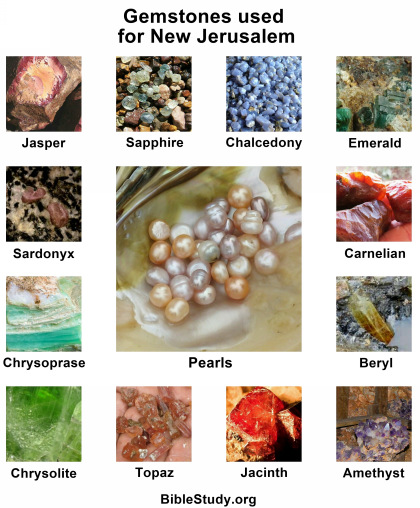
The fifth, sardonyx; the sixth, sardius; the seventh, chrysolite (Greek chrusolithos, Strong's Concordance #G5555); the eighth, beryl; the ninth, a topaz; the tenth, a chrysoprasus; the eleventh, a jacinth; the twelfth, an amethyst. (Revelation 21:19 - 20).
Chrysolite is derived from the Greek chrusolithos, a word with Strong's defines as a gold or yellow gem. Thayer's Greek Definitions calls it, "a precious stone of golden color."
Folklore and Myth
The 1906 Jewish Encyclopedia, in its article on the Ark of the Covenant, states the following Islamic tradition regarding the relationship between this holy container and the chrysolite gemstone.
"Others said that there was in the Ark a figure of chrysolite or ruby with the head and tail of a shecat and with two wings. It would utter a moaning sound, and the Ark would rush toward the enemy with the Israelites following it. When it stayed, they stood and were at ease, and victory came."
The golden yellow color of this gem was associated with the sun and Sunday. A donkey engraved on the gem gave the wearer, it was believed, the ability to predict the future.
If a vulture was etched onto a chrysolite it was, at one time, believed to give the person who possessed it the power to control demons and the winds.
The grinding up and injesting of a chrysolite stone was once considered a remedy for various ailments.
"Precious stones were often employed as amulets, and some, not content to wear them externally, adopted the means of reducing them to powder, and taking them as internal remedies . . .
"Chrysolite is described as the friend of wisdom and the enemy of folly." (On Superstitions Connected with the History and Practice of Medicine and Surgery, page 69 - 70).
Chrysolite was also thought to dispel various "terrors" of the night but only if it was worn in a setting of gold (Curious Lore of Precious Stones, pages 66 - 67, 133).