How will this gem be used to fulfill end time Biblical prophecy? What was chrysoprase used for? What powers were believed to be possessed by this precious stone?
Description of Gem
The gemstone chrysoprasus, found in the King James Bible, is a variant spelling of chrysoprase.
Chrysoprase is only one gem in the chalcedony gemstone family. Others in this group include agates, carnelians, the onyx stone, sardonyx and jaspers.
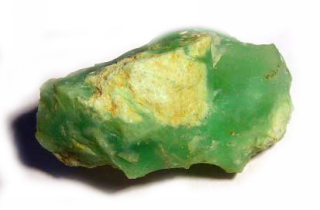
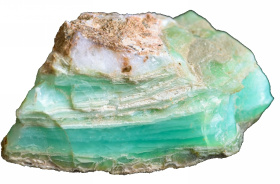
This gem is composed of cryptocrystalline quartz that is too small to be seen without magnification. Its color comes from trace amounts of nickel which give the stone its characteristic variations of the color green (apple green, mint green).
Sources
Modern sources of chrysoprase stones include Australia, Indonesia, Poland, Germany, Russia, Brazil, Tanzania and the United States.
How Hard Is it?
Chrysoprase has a hardness of 6.5 to 7 on the Mohs scale. It shares the same hardness as other Bible gemstones such as jasper, onyx, chrysolite, chalcedony, peridot, agate and carnelian.
Biblical Occurrences
Chrysoprase is not mentioned by name in the King James Bible. It is, however, mistakenly referred to as chrysoprasus in the book of Revelation.
John's prophecy of the New Jerusalem, created by God, reveals that chrysoprase (chrysoprasus) will be utilized to create the city's tenth foundation stone!
And the foundations of the wall of the city were garnished with all manner of precious stones. The first foundation was jasper; the second, sapphire; the third, a chalcedony; the fourth, an emerald;
The fifth, sardonyx; the sixth, sardius; the seventh, chrysolite; the eighth, beryl; the ninth, a topaz; the tenth, a chrysoprasus (Greek chrusoprasos, Strong's #G5556); the eleventh, a jacinth; the twelfth, an amethyst. (Revelation 21:19 - 20).
Other Uses
The gem was, and is, commonly used in necklaces. Chrysoprase was particularly fashionable in ancient and medieval jewelry where it was also used extensively in decorative architecture.
Facts and Folklore
Chrysoprase is one of at least seven stones mislabeled or misspelled in the Bible. The others in this group include carnelians, turquoise, lapis lazuli, peridot, red garnet and rock crystal.
The most prized chrysoprase stones have an even, vivid green color with good translucency and minimal white or gray patches (called "chalky" areas by gemologists).
Chrysoprase was especially desirable in 18th-century European royal courts, notably in Frederick the Great's Prussian court, where it was used in decorative objects and jewelry.
This gemstone is traditionally associated with happiness, hope, prosperity, and emotional balance.
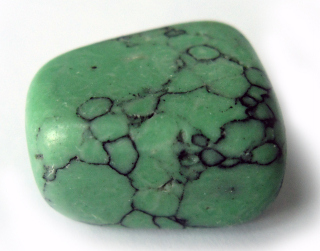
Placed against the body, chrysoprase was believed to produce shivering and chills that began in the chest region and spread to the entire body (Curious Lore of Precious Stones, pages 11, 67 - 68).
It was once believed that thieves, sentenced to be beheaded or hanged, who placed a chrysoprase in their mouth, would be able to escape their executioners as if they were invisible (ibid.).