Occurrences in the Bible
The English word "purple," in the King James Bible, occurs 48 times in 48 verses. It is found the most, by far, in the book of Exodus (26 times) followed by the book of Revelation and 2Chronicles (3 times each).
The Hebrew Old Testament word translated as purple is argaman (Strong's Concordance #H713). There are, however, three Greek New Testament words used for this color. The first is porphura (#G4209) which refers to the animal from which the pigment is extracted. The second is porphurous (#G4210) which is the color's literal name. The third is porphuropolis (#G4211) which is a reference to a female trader of the dye.
Background
Purple has an HTML hex code for the color of #800080. It derives its name from purpura, a shellfish from which Tyrian dye was made.

composed of 50% red, 50% blue
In ancient times, the cities of Tyre and Sidon were well-known producers of this pigment and possessed a thriving dyeing industry. The prophet Ezekiel mentions the Tyrians obtaining purple from the islands of Elishah (Ezekiel 27:7) and through the Syrians (verse 16).
The production of purple dye was a long and laborious task. The liquid used to create it came from a tiny Mediterranean Sea snail gland. Each snail produced only a single drop of the needed fluid. To produce one pound of dye, during the time of the Roman Empire, took the acquiring of four million mollusks.
The rarity of this color in nature and the expense of creating its dye gave it a great deal of prestige. It was the most expensive dye known to the ancient Israelites in the Bible.
Purple was the pigment of choice for those of noble or royal birth or those who were high-level officials. Roman Emperors wore clothing colored purple. Catholic bishops have, for many years, worn it as well.
When someone in the Catholic Church was promoted to the rank of a cardinal, they were said to have been "raised to the purple." The phrase "born to the purple" was sometimes used as a reference to someone either born into royalty or a privileged class.
Constantine VII, Emperor of the Byzantine Empire (b. 905, d. 959 A.D.), was given the title of Porphyrogenitus, which means "born of the purple room."
Biblical Symbolism
Purple can represent royalty, majesty and high-ranking officials. Gideon, for example, as payment for saving Israel, asked for (among other things) the royal clothing of the Midianite kings.
And Gideon said to them, "I would desire a favor of you, that each man of you would give me the earrings of his prey." . . .
And the weight of the golden earrings which he asked for was seventeen hundred shekels of gold, besides ornaments, and pendants, and purple clothing that was on the kings of Midian, and besides the chains around their camels' necks. (Judges 8:24, 26).
Mordecai, after he and Esther defeated Haman's plot to kill all the Jews, was given a powerful position serving Persia's king. This authority was marked by a quality linen colored purple.
And Mordecai went out from the presence of the king in royal clothing of blue and white, and with a great crown of gold, and with a garment of fine linen and purple. And the city of Shushan rejoiced and was glad. (Esther 8:15).
Purple can also convey wealth, prosperity and luxury. One of the many traits of the "virtuous wife" of Proverbs 31 was that she was industrious which made her prosperous.
She is not afraid of the snow for her household: for all her household are clothed with scarlet. She maketh herself coverings of tapestry; her clothing is silk and purple. (Proverbs 31:21 - 22, KJV).
The end time great whore of Babylon will be shown to have gotten wealthy and powerful through sin and deception.
And the woman was clothed in purple and scarlet, and was adorned with gold and pearls and precious stones; and she had a golden cup in her hand, filled with abominations and the filthiness of her fornication;
And across her forehead a name was written: MYSTERY, BABYLON THE GREAT, THE MOTHER OF THE HARLOTS AND OF THE ABOMINATIONS OF THE EARTH. (Revelation 17:4 - 5).
And the merchants of the earth will weep and mourn over her, because no one will buy their merchandise any more: The merchandise of gold, and silver, and precious stones, and pearls, and fine linen, and purple, and silk, and scarlet . . . (Revelation 18:11 - 12).
More Examples
God commanded Moses to have special garments made for Aaron for his work as Israel's High Priest.
And of the blue and purple and scarlet, they made woven garments for ministering in the sanctuary. And they made the holy garments for Aaron, even as the Lord commanded Moses.
And he made the ephod of gold, blue and purple and scarlet, and fine-twined bleached linen. (Exodus 39:1 - 2).
Purple was an integral part of the temple and its services (Exodus 25:4, 26:1, 36, 27:16, Numbers 4:13, etc.). It was used in curtains (veils) and carpets found in the tabernacle (along with blue, scarlet and white). Working with it was such an important skill that King Solomon requested from Tyre's King Hiram a man specializing in dyeing with it to supervise building the temple.
Now, therefore, send me a man skillful to work in gold, and in silver, and in bronze, and in iron, and in purple, and crimson, and blue, and one who is skillful to engrave with the skillful men who are with me in Judah and in Jerusalem, whom David my father provided (2Chronicles 2:7, HBFV).
The Gospels of Mark and John state that the robe Pontius Pilate's soldiers placed on Jesus, in order to mock him, was purple. They did this to make fun of the claim that he was the King of the Jews.
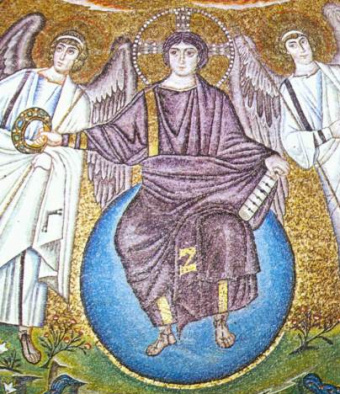
And they put a purple robe on Him; and after weaving a crown of thorns, they put it on Him; And they began to salute Him, and kept on saying, "Hail, King of the Jews!" . . .
And when they had finished mocking Him, they took the purple robe off Him and put His own garments on Him; and they led Him out to crucify Him (Mark 15:17 - 18, 20, HBFV, see also John 19:2, 5).
The book of Matthew says, however, that the robe was scarlet colored (Matthew 27:28).
During his second missionary journey the Apostle Paul finds himself in Philippi, being guided to preach the gospel in Europe by the Holy Spirit (Acts 16:9 - 10). On the Sabbath he meets a businesswoman named Lydia, a seller of dyes whose hometown was Thyatira.
And a certain woman who worshiped God was listening; she was named Lydia and was a seller of purple from the city of Thyatira; whose heart the Lord opened to receive the things spoken by Paul (Acts 16:14, HBFV).
The city of Thyatira was well known for its ability to dye cloth. Such skills made it a prosperous trading town. Lydia almost certainly was financially well off due to her trade, as she owned a home both in Thyatira and Philippi.
According to the Bible, Lydia and her entire household, after listening to the Apostle Paul preach the gospel, became Christians. Her Philippian home, made prosperous through purple, quickly becomes a gather place for fellow believers (Acts 16:40) and the focal point for spreading the gospel in the city.