Background
The word "treasure" is recorded in the gospels thirteen times in eleven King James Bible verses. Both Luke and Matthew use it six times with Mark using it once. The parable of hidden treasure is only found in Matthew 13. It was given, like the parable of hidden leaven (verse 33) and others found within the chapter, between October 28 A.D. and Early 29 A.D.
This parable centered on treasure is the fifth of eight recorded in Matthew 13. Jesus uses the first seven to reveal characteristics of the kingdom of God while the eighth, known as the good householder (v. 52), focuses on those who understand and teach the parables to others.
This hidden treasure story is the first of four in the chapter that Jesus taught privately to the disciples while they gathered in a Capernaum home (see Matthew 13:36). The others were the parables of the pearl of great price (45 - 46), the dragnet (47 - 50) and the good householder (52). These four are different than the chapter's first four which were taught to a large crowd gathered on the shore of the Sea of Galilee (see verses 1 - 2).
The Parable
"Again, the kingdom of heaven is compared to treasure hidden in a field; which when a man finds, he conceals, and for the joy of finding it, goes and sells everything that he has, and buys that field." (Matthew 13:44).
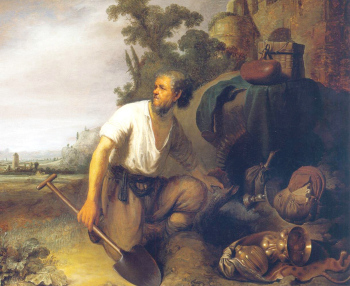
This parable centers around a person who stumbles upon some hidden treasure in a field he does not own. After making his discovery he tells no one what he found and quicky proceeds to sell all he owns to buy the field hiding riches.
It is interesting to note that the person of the parable finds the hidden treasure by accident. In contrast, the merchant of the pearl of great price story (Matthew 13:45 - 46) finds something incredibly valuable after carrying out a diligent search.
What Was Found?
Parables use known situations, experiences, objects and alike to reveal a spiritual truth or moral teaching. What, therefore, was the treasure discovered hidden in a field that is meant to symbolize the kingdom of heaven? What would be so valuable as to cause someone to sell all they have to own it?
The treasure could have been coins, jewelry or other valuables buried in the ground to keep it safe and protect it from others such as robbers. If this were the case then the man's behavior could easily be construed as being dishonest or even stealing.
The man of the parable must buy the field from someone who already owns it. The right thing to do would be to inform the owner of his discovery. The treasure could have been owned and buried by the land owner himself, a family member, or possibly even his ancestors, the fate of which he had a right to determine.
The fact that the person is buying the land for far less than its known real worth (given its valuables the owner forgot or was unaware of) hints at a possible dishonest deal.
Another possibility is that the treasure could have been a gold or silver mine which required the man to buy the land (Adam Clarke's Commentary).
One way around the issues mentioned above is to accept the parable assumes the man has the legal right to purchase the land as is. Another possibly answer would be to assume the legality or morality of the transaction does not matter in Jesus' story.
Meaning
The meaning of the hidden treasure story was understood by the disciples the moment they heard it. This contrasts with the parable of the tares which baffled them and required Jesus' explanation for them to understand it (Matthew 13:24 - 30, 36 - 43). The Bible confirms the disciples knew what the treasure story meant because the Lord asked them about it.
Jesus said to them, "Have you understood all these things?" They said to Him, "Yes, Lord." (Matthew 13:51).
Jesus' parable of the hidden treasure testifies to the importance individuals should give to pursuing God's kingdom through the gospel. It also speaks to the total commitment necessary to both gain and live its message.