Background
The parable of the unjust judge was given by Jesus roughly between January and February of 30 A.D. This period was several weeks before his crucifixion in early April. He taught this parable to his disciples as they traveled south through the middle of Samaria (Luke 17:11).
Luke is the only one of the four gospel writers to record the unjust judge parable (Luke 18:1 - 8). It is one of at least ten found nowhere else such as the parables of the good Samaritan (chapter 10), the lost coin (15), the prodigal son (15), the unjust steward (16) and the rich man and Lazarus (16).
The Judge
The parable of the unjust judge opens by revealing two important traits that will figure prominently in this story.
"There was in a certain city a certain judge who neither feared God nor respected man." (Luke 18:2, HBFV throughout).
The character traits of this official were important enough to repeat a second time (verse 4)!
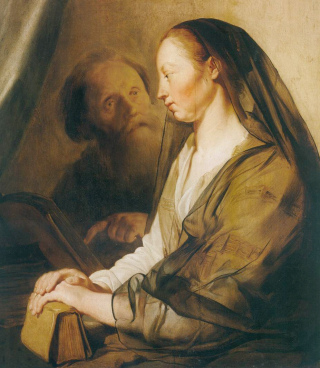
Judges, in the Old Testament, were charged with administering justice based on the principles found in God's law. They were to be righteous legal officials who offered fair decisions without a respect for persons. They were additionally forbidden to pervert justice or take brides (Leviticus 19:15, Deuteronomy 16:18 - 19).
The judge of this parable, however, did not look to please God or even cared what his Creator thought about his actions. He also was void of any compassion toward others or cared what they thought of him. He had a stone-cold heart that pursued only what benefitted him!
The Widow
The widow of this parable comes to the unrighteous judge not seeking revenge but justice for her cause.
"And there was a widow in that city; and she kept coming to him, saying, 'Avenge me of my adversary.' (Luke 18:3).
Widows, in the Bible, are the ultimate example of oppressed people as they had no means of support and were usually poor. God's law placed special emphasis on judges (and others) giving special attention to the causes of such people, with severe penalties for taking advantage of them!
You shall not afflict any widow or fatherless child. If you afflict them in any way, and they cry at all to Me, I will surely hear their cry. And My wrath shall burn, and I will kill you with the sword . . . (Exodus 22:22 - 24, see also Deuteronomy 10:18, Isaiah 1:17).
The Heart of the Matter
The unjust judge, without regard for God or man, refused for quite a while to help the widow seeking justice (Luke 18:4). Her persistence however, like water flowing over a rock, eventually wore him down. It was her constant pleas for what was right that finally achieved her goal.
"'Although I do not fear God and do not respect man, yet because this widow is causing me trouble, I will avenge her, lest she wear me out by her continual coming.'" (Luke 18:4 - 5).
The unjust judge finally decides to do his job to stop the widow from causing him further trouble.
Purpose of the Story
Jesus gave this parable to encourage his disciples to be persistent in prayer as such determination carries great weight with God!
And He also spoke a parable to them to show that it is necessary to pray always, and not to give up (Luke 18:1).
The widow gave the unjust judge ever indication she was determined to continue pestering him until he acquiesced. He was only moved to act because it was in his best interest to do so. If such an unrighteous man could be prodded to do right, how much more ready to respond is the Father who is righteous and perfectly loves humans?
"And shall not God execute vengeance for His elect, who cry out to Him day and night, and patiently watch over them? I tell you that He will execute vengeance for them speedily." (Luke 18:7 - 8).
The parable of the unjust judge closes by Jesus wondering whether, just before his return, there will be Christians with enough faith to be persistent with God (Luke 18:8).