Luke 1
1. Why and for whom did Luke write his gospel? Answer
2. Who was Herod and Zacharias? (v. 5) Answer
3. Who was Abijah? When did his course serve in the temple? (v. 5) Answer
4. What does verse 6 tell us about God? Answer
5. What was Zacharias doing when an angel appeared to him? (v. 8 - 9) Answer
6. What is unique about the angelic appearance in Jerusalem's temple? (v. 11) Answer
7. What was rare and special about John the Baptist's calling? (v. 15) Answer
8. Where does the quote in verse 17 come from? Answer
9. When did Elizabeth conceive John the Baptist? (v. 23 - 24) Answer
10. What prophecies are referenced in verses 31 to 33? Answer
11. What is the basic meaning of verse 35? Answer
12. What does verse 41 prove? Answer
13. What is Mary's exultation of God, found in verses 46 to 55, usually referred to? Answer
14. What prophecy is referenced in verse 69? Answer
15. When was the "promise of mercy" made to Abraham? (v. 72 - 73) Answer
16. What prophecy is referenced in verse 76? Answer
Luke 2
17. What is unique about Luke 1:5 to 2:38? Answer
18. What was the purpose of those in Judea being registered? (v. 1 - 3) Answer
19. How was Joseph physically linked to King David? (v. 4) Answer
20. What is a betrothal? (v. 5) Answer
21. Why was there no place at any Bethlehem inn for Jesus' family to stay? (v. 7) Answer
22. What prophecies were fulfilled in Luke 2:4, 6 - 7? Answer
23. What makes the event described in verse 13 unique? Answer
24. What is the meaning of verse 14? Answer
25. Why did Jesus' family offer turtledoves or pigeons? (v. 24) Answer
26. What makes the events of verses 40 to 52 unique? Answer
27. What does verse 49 tell us about Jesus? Answer
Luke 3
28. Who were Herod and Philip mentioned in verse 1? Answer
29. When did John the Baptist begin his ministry? (v. 2) Answer
30. Why did John condemn the religious leaders that came to see him? (v. 7 - 8) Answer
31. What was John's response to those who asked what they should do? (v. 10 - 14) Answer
32. What is revealed in verse 15? Answer
33. What is John discussing in verses 16 - 17? Answer
34. What was the great sin of Herod the tetrarch? (v. 19) Answer
35. Through whom does Luke trace Jesus' genealogy in verses 23 - 38? Answer
Luke 4
36. What does verse 2 teach us about Jesus' temptation by Satan the devil? Answer
37. What Biblical verse did Jesus quote in verse 4? Answer
38. Which Old Testament verse did Jesus use in verse 8? Answer
39. Did the devil tell the truth in verses 5 to 7? Answer
40. What did the devil quote in verses 10 - 11? Answer
41. What is revealed in verses 16 to 21 concerning the timing of Jesus' ministry? Answer
42. Why couldn't Jesus do mighty miracles in Nazareth? (v. 23) Answer
43. What is unique about the event describe in verses 28 to 30? Answer
44. What do verses 33 to 34 teach about demons and their relationship with Jesus? Answer
Luke 5
45. What is the location of Lake Gennesaret? (v. 1) Answer
46. Why was verses 5 to 10 a turning point in the lives of three disciples? Answer
47. Which Old Testament passage is Jesus quoting in verse 14? Answer
48. What is revealed in verses 17 to 26 about Jesus? Answer
49. Why were the religious leaders mad at Jesus? (v. 21) Answer
50. Why were tax collectors considered some of the worst sinners? (v. 27 - 32) Answer
51. What does the parable of verses 36 to 39 teach? Answer
Luke 1 Answers
1. Luke wrote his gospel for a man named Theophilus whose name means "lover of God" (Luke 1:3). Nothing more is known about him except that Luke's reference to him as "most excellent Theophilus" could mean he was a person of rank or possibly a Roman officer.
[Why Is Luke the Biggest Gospel?]
Luke wrote his gospel so that Theophilus could know, for certainty, the events in Jesus' life and ministry in an orderly fashion.
2. The Herod mentioned in Luke 1:5 was Herod the Great. He was appointed the king of Judea, by Rome, in 40 B.C. His actual reign began in 37 B.C., however, as it took three years to gather an army and conquer Jerusalem.
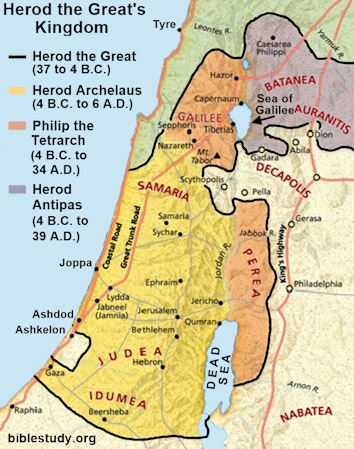
Zacharias was the husband of Elizabeth and father of John the Baptist. He was one of the many descendants of Aaron, the first High Priest, to serve in Jerusalem's temple.
[Why Did John the Baptist Doubt Jesus?]
3. Abijah was the head of one of the 24 families who were descendants of Aaron at the time of King David. It was David who appointed each of these families to serve as a course in Jerusalem's temple (1Chronicles 24). It was the responsibility of each course to fulfill various temple jobs such as assistants, musicians, guards, gate keepers and so on.
Zacharias was a priest according to the course of Abijah, the eighth of twenty-four courses or "shifts" that served in the temple in any given year.
The first shift of each year began on the first day of the sacred year which was Nisan 1. In 6 B.C., when John the Baptist was conceived, this day was on the weekly Sabbath of March 20. Shifts ran for one week, from noon on one Saturday (Sabbath) to the next.
[What Is the Biblical Calendar?]
Zacharias' shift, in 6 B.C., ran from May 15 to 22. He also served on May 23, the day of Pentecost, as all priestly courses were required to work during busy festival seasons.
4. Luke 1:6 reveals that a person who diligently follows God's Old Testament law can be considered righteous in his eyes! This is in direct contrast to the many people who today believe what was written in the Old Testament is no longer valid or useful for training someone in righteousness (see 2Timothy 3:16).
[Paul's Teaching on God's Law]
5. Lots were used to choose which of the priests, during their week of service at Jerusalem's temple, would be honored by offering incense before God. Zacharias, selected by lot, was performing such a task when an angel miraculously appeared to him. Because of the substantial number of priests who served, this was likely the only time Zacharias would burn incense before God.
6. Luke 1:6 is the only record in the Bible where an angel made an appearance to humans in Jerusalem's temple.
7. John the Baptist was chosen, in the womb, to be put under a Nazarite vow. The vow entailed abstaining from wine or drinking anything with alcohol in it, not shaving any of the hairs on one's head and other requirements (Numbers 6).
The only Old Testament people known to have been dedicated as a Nazarite from the womb are Samson (Judges 13:7, 16:17) and Samuel (see 1Samuel 1:11).
8. The quote in Luke 1:17 comes from the book of Malachi.
Behold, I will send you Elijah the prophet before the coming of the great and dreadful day of the Lord. And he shall turn the heart of the fathers to the sons, and the heart of the sons to their fathers . . . (Malachi 4:5 - 6, HBFV throughout).
9. It was likely on Pentecost in 6 B.C. (May 23) that Zacharias was visited by an angel while performing his priestly duties. The angel informs him his wife, who is old and barren, will be healed and conceive a son to be named John (Luke 1:13).
John's conception likely took place in early June (Luke 1:23 - 24) after Zacharias completed his temple duties.
10. Luke 1:31 references the prophecy recorded in Isaiah.
Therefore, the Lord Himself shall give you a sign. Behold, the virgin shall conceive and bring forth a Son, and they shall call His name Immanuel (Isaiah 7:14, HBFV).
[Should Jesus be Called Immanuel?]
When Isaiah's prophecy is referenced in Matthew 1:23, in the King James Bible, Immanuel is spelled Emmanuel.
Verses 32 and 33 of Luke 1 references prophecies from Isaiah, Jeremiah and the Psalms.
For unto us a Child is born, unto us a Son is given; and the government shall be upon His shoulder; and His name shall be called Wonderful, Counselor, The Mighty God, The Everlasting Father, The Prince of Peace.
Of the increase of His government and peace there shall be no end, upon the throne of David, and over His kingdom, to order it and to establish it with judgment and with righteousness from henceforth, even forever . . . (Isaiah 9:6 - 7, see also Jeremiah 23:5 - 6 and Psalm 132:11).
11. Mary asked the angel sent to her how she would become pregnant since she hadn't had sex (Luke 1:34). The angel responded that she would be miraculously impregnated by God's presence through His Holy Spirit.
[Were Mary and Joseph Christians?]
Although God's spirit made Jesus' life inside her possible, Mary was not given the Holy Spirit that would have converted her and made her a Christian. This is shown by the fact that after the Lord's birth there were many things in which she did not understand their meaning (Luke 2:19, 33, 50, etc.).
Mary would not be given God's spirit unto conversion until she and many others (including the apostles) received it and became Christians on Pentecost in 30 A.D. (Acts 1:14, 2:1 - 4).
12. According to Luke, Elizabeth was six months pregnant with John when, after hearing the voice of Mary, the baby leaped for joy! This is one of the proofs that a baby still in the womb is a human being (and not a mass of tissue) that can recognize voices and respond to them.
[What Does the Bible Say About Abortion?]
When Mary first met Elizabeth she had already experienced the miraculous conception of Jesus inside her (see Luke 1:42 - 43). This means that John, in the womb, recognized that Jesus was in Mary even though the Lord had only been in her womb less than a week!
13. Luke 1:46 to 55 is sometimes referenced as the Magnificat. This set of verses is also sometimes called the Canticle (or Song) of Mary, These verses are Mary's exultation of God for his mercy and love bestowed upon her. She also praises the Almighty for his mercies toward Israel and for the fulfillment of certain promises made to Abraham.
14. Luke 1:69, which praises God for offering salvation through the house of David, alludes back to Psalm 132.
There I will make the horn of David to bud; I have prepared a lamp for My anointed (Psalm 132:17, HBFV).
15. The promise of mercy to Abraham, mentioned in Luke 1:72 - 73, was made by God in Genesis 12.
And the Lord said to Abram (later Abraham), "Get out of your country, and from your kindred, and from your father’s house into a land that I will show you.
"And I will make of you a great nation. And I will bless you and make your name great. And you shall be a blessing. And I will bless those that bless you and curse the one who curses you. And in you shall all families of the earth be blessed." (Genesis 12:1 - 3, HBFV).
16. Luke 1:76 references two prophecies, one in Isaiah 40 and the other in Malachi 3.
A voice is calling out in the wilderness, "Prepare the way of the Lord, make straight in the desert a highway for our God." (Isaiah 40:3, HBFV).
"Behold, I will send My messenger, and he will prepare the way before Me . . . (Malachi 3:1, HBFV).
Luke 2 Answers
17. Luke interviewed a variety of people, including Jesus' mother Mary, for his book. He was therefore able to include events and information, from Mary's point of view, not found in the other gospel accounts. Luke 1:5 to 2:38 is a perfect example of one of the many passages in his gospel that reveals unique information.
18. The Roman Empire required all those in areas it controlled to be registered so that they could be taxed.
In the special case of the Jews, the Romans required them to be registered not where they lived but from where they traced their lineage (where their family records were kept). Since Joseph was a descendant of David, he had to travel to David's birthplace of Bethlehem (Luke 2:4).
19. Matthew's genealogy traces the legal lineage of Jesus starting with Abraham, then through the kings of Judah, then through a line of royal descendants to Joseph. Please see our chart showing Jesus' legal genealogy for more information.
[Jesus' Genealogy Through Mary!]
20. A betrothal is a bit like our modern practice of a couple promising to marry each other (engaged to be married) with some major differences. In the Old Testament, a couple betrothed to one another were considered legally married.
[Were Mary and Joseph Married?]
During the betrothal period the couple lived apart (usually with their parents) and were not to engage in any sexual activity. It was only after the man came for his wife (see Matthew 25:6) and took her back home that the couple could consummate their marriage.
21. There was no available lodging in Bethlehem (Luke 2:7), when Jesus was born, due to two factors. The first was the city was jam-packed with other Jews who also had to travel to the city for taxation. The second was, given the Lord highly likely was born on the Feast of Trumpets, the city was also crowded with those celebrating the fall Feast days in nearby Jerusalem.
22. The prophecies fulfilled in Luke 2:4, 6 - 7 are the following.
And you, Bethlehem Ephrathah, you being least among the thousands of Judah, out of you He shall come forth to Me, that is to become Ruler in Israel. He Whose goings forth have been from of old, from the days of eternity (Micah 5:2, HBFV).
Therefore, the Lord Himself shall give you a sign. Behold, the virgin shall conceive and bring forth a Son, and they shall call His name Immanuel (Isaiah 7:14, HBFV).
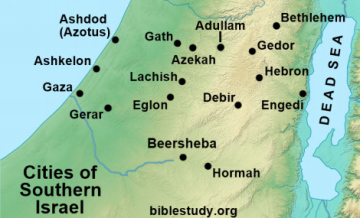
23. Luke 2:13 marks only the second time in the Bible where angels are recorded gathering together to sing praises to God. The first recorded time they did so is found in Job 38:7.
[Picture of Bethlehem's Fields]
24. The King James translation of Luke 2:14 is the following.
Glory to God in the highest, and on earth peace, good will toward men (Luke 2:14, KJV).
A modern translation of the same verse, however, says the following.
"Glory to God in the highest, and peace on earth among men of goodwill." (Luke 2:14).
[Why Didn't Jesus Bring Peace?]
The King James of Luke 2:14 makes it seem like the angels were pronouncing peace and good will to all humans. This, however, was not the case. They were not declaring God's peace (approval) on those indulging in sin, those who rejected God, and so on. The angels were declaring that those of goodwill, meaning those who were repentant and obedient to God, would experience peace.
[What Is the Destiny of Angels?]
25. God's law required every couple to not only circumcise their males (Leviticus 12:3) but also to make a special offering for their firstborn son (Exodus 13:2, 12). An offering of either a pair of turtledoves or pigeons was allowed for those who were too poor to offer a lamb (Leviticus 12:8).
26. Luke could only have known of the events of verses 40 to 52 of chapter 2 through Mary. He clearly interviewed her for his gospel and recorded what she told him.
27. Luke 1:49 reveals that at the age of twelve Jesus was fully aware that God, not Joseph, was his Father. It also shows he understood that, as God in the flesh, his purpose was to carry out his heavenly Father's will.
[When Did Jesus Know He Was God?]
Luke 3 Answers
28. The Herod referenced in Luke 3:1 was Herod Antipas, the tetrarch of Galilee who was the son of Herod the Great and a woman named Malthace. He was made tetrarch of Galilee and Perea around 4 B.C.
The full name of Philip, tetrarch of Iturea and Trachonitis, was Philip the Tetrarch (also called Herod Philip II by modern writers). After the death of his father Herod the Great in 4 B.C. he was elevated to a position of authority.
29. John the Baptist's ministry began six months before the ministry of Jesus. Since Jesus' ministry began on September 11 in 26 A.D. (the Day of Atonement), John's began on or around March 11 which is near the beginning of the Biblical sacred year.
[Who Were John the Baptist's Disciples?]
30. The religious leaders that came to seen John the Baptist did not come to be baptized or to repent. They came because they were envious of his crowds and to spy out what he was preaching. They clearly rejected both him and his message, as John knew, as shown by what Jesus would say later in Luke.
For John the Baptist came neither eating bread nor drinking wine, and you (the Jewish religious leaders) said, 'He has a demon.' (Luke 7:33, HBFV, see also 20:4 - 5).
John gets to the heart of the matter by calling on the leaders, if they are truly repentant, to produce fruits worthy of such a changed attitude. He also warns them that being Abraham's descendants is not, of itself, enough to save or justify them to God!
31. Luke records that John recommended specific actions for certain groups of people to show that they were sincerely repentant.
John, for the general public seeing him, told them to be generous in helping the poor. He told tax collectors to be honest at their jobs, implying they should not extort or otherwise use their responsibilities to enrich themselves. He lastly told soldiers to also be content with their wages and warned them not to oppress or falsely accuse.
[How Should We Treat the Poor?]
32. Luke 3:15 reveals, at the time of John the Baptist's ministry, most people in Judea were expecting the appearance of the Messiah. The people even wondered whether John was the Messiah, a belief he quicky squashed (Luke 3:16 - 17).
33. Luke 3:16 - 17 reveals that God will ultimately do two things. Those who are "baptized" by his spirit, meaning the repentant and converted, will someday be gathered to live forever. The three main times of such a gathering are Jesus' Second Coming, those called and converted during the Millennium, and those raised up in the second resurrection who repent.
[What Is the First Resurrection?]
[How Many Resurrections Are There?]
Those who refuse to repent and harden their hearts against God are the "chaff" that will be punished by eternal death in the lake of unquenchable fire.
34. John the Baptist was put in prison by Herod Antipas for speaking out against his marriage to his sister-in-law Herodias.
[Does the Bible Approve of Incest?]
Herod's marriage was both adulterous (Leviticus 20:21) and incestuous. Leviticus 18:7 - 15 labels as sinful any sex between a person and their relatives (e.g. mother, father, stepmother, stepfather, etc.) which includes intercourse with the wife of a brother or half-brother.
35. Luke uses a little trick to trace Jesus' bloodline starting with Mary all the way back to God! Luke uses the phrase "as was supposed the son of Joseph" as a placeholder for Mary. This was done, in part, because accepted genealogies were male-centered (for inheritance reasons, etc.).
The father of Joseph, Jesus' stepfather, was named Jacob (Matthew 1:16). He was not named Heli (Eli in some translations). Heli (Eli), mentioned in Luke 3:23, was MARY'S father, making him Joseph's father-in-law.
Luke 4 Answers
36. Luke 4:2 reveals that Jesus was tempted by the devil for the entire 40-day period in which he fasted. The three temptations listed in Luke 2 were likely the last ones Satan threw at Christ.
[How Was Jesus Tempted by Satan?]
Luke 4:2 also lets us know that, just like any other human, Jesus experienced the trial of being hungry and near death.
37. The verse Jesus quoted in Luke 4:4 to combat the devil's temptation for him is in Deuteronomy 8.
[What Is the Most Accurate Bible?]
[The Old Testament in the Gospels]
And He humbled you and allowed you to hunger, and then He fed you with manna which you did not know, neither did your fathers know it, so that He might make you know that man does not live by bread alone; but by every word that proceeds out of the mouth of the Lord does man live (Deuteronomy 8:3).
38. Jesus, in Luke 4:8, quoted from Deuteronomy.
You shall fear the Lord your God. You shall serve Him, and you shall hold fast to Him, and swear by His name. (Deuteronomy 10:20, see also 6:13).
39. The devil, after showing Jesus the glory of the earth's kingdoms, makes a one-of-a-kind offer!
"I will give You all this authority, and the glory of them all; for it has been delivered to me, and I give it to whomever I desire. Therefore, if You will worship me in my presence, all things shall be Yours." (Luke 4:6 - 7).
[Does the Devil Rule the World?]
God, after Lucifer fulfilled his role as a covering cherub (Ezekiel 28:14), gave him a throne over the earth (Isaiah 14:13). He was allowed to keep this throne, and its authority, after he sinned and turned himself into Satan the devil (John 12:31, 2Corinthians 4:3 - 4, Ephesians 2:1). The devil, at the time he was tempting Christ, had the right to give what he offered.
Satan's final temptation (listed as the second of three recorded in Luke) offered Jesus immediate rule over all humans without having to endure more trials or the painful death of crucifixion. The only condition was that Jesus had to worship the devil as if he was God the Father! The Lord rejected the offer, in part, because he knew he had to die to become a perfect sacrifice for our sins.
[What Does Satan the Devil Want?]
40. Amazingly, Satan the devil tempted Jesus by quoting the Bible! In Luke 4:10 - 11 He subtlety used a passage from Psalm 91 in an attempt to have Jesus sin.
Because you have made the Lord, Who is my refuge, even the Most High, your habitation, no evil shall befall you, nor shall any plague come near your dwelling,
For He shall give His angels charge over you to keep you in all your ways. They shall bear you up in their hands, lest you dash your foot against a stone (Psalm 91:9 - 12, HBFV).
Satan tempted Jesus by perverting the intention of the above verses. Psalm 91:9 - 12 is a promise of God's help and protection against events outside a person's control (plagues, accidents, etc.). They do not cover situations where a person knowingly chooses to put himself in dangerous circumstances so that he can "test" God's love.
The devil was testing Jesus to see if he would succumb to vanity and "prove" he was the Messiah! Jesus rightfully rebuked the temptation by quoting from Deuteronomy 6:16.
41. Jesus, in Luke 4:16 - 21, was proclaiming that the "acceptable year of the Lord," which is a direct reference to the Jubilee year declared on Atonement (Leviticus 25:9 - 10), was taking place as he spoke (Appointed Times of Jesus the Messiah, Appendix C)!
The Jubilee Jesus declared in 27 A.D. had begun at sunset on September 10 in 26 A.D. It ran until sunset on September 29 in the year Jesus spoke his proclamation.
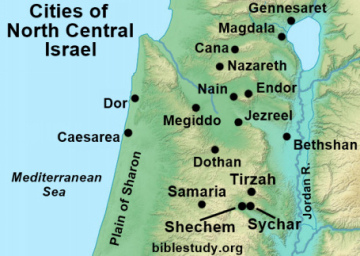
42. Those in the Nazareth synagogue in which Jesus preached lacked faith. They flatly refused to believe that someone they've known for years could be a prophet (let alone the Messiah).
[Why Couldn't Jesus Do Miracles in Nazareth?]
The crowd's refusal to accept the Lord's miraculous acts in other places as proof of his unique mission (Matthew 13:54, Mark 6:2, Luke 4:23) earned them a rebuke. It also led to only a few miracles being performed as doing more wouldn't have convinced the crowd he was their Savior.
43. Luke 4:28 - 30 is the first attempt to kill Jesus during his ministry.
[What Are the Types of Demons?]
44. Luke 4:33 - 34 shows that demons knew the identity of Jesus as God's Son (God in the flesh). They had no doubt about his authority and power over them. This is contrasted with the fact that the disciples were many times clueless about who Jesus was or the authority he possessed.
Luke 5 Answers
45. Gennesaret was the name of a district on the northwest shore of the Sea of Galilee where Jesus performed many of his miracles. Lake Gennesaret, mentioned in Luke 5:1, is another name for the Sea of Galilee. It is also called in the Bible the Sea of Chinnereth (Numbers 34:11) and the Sea of Tiberias (John 6:1).
[Original Biblical City Names]
46. Simon Peter, James and John, in Luke 5:4 - 10, are not only called by Jesus to follow him but also to accompany him on his first preaching tour of Galilee. These verses also record the famous incident where Jesus tells them they will no longer catch fish but men.
[Who Were the First Disciples?]
[Why Are Christians Symbolized by a Fish?]
. . . Then Jesus said to Simon, "Fear not; from this time forth you shall be catching men." (Luke 5:10, HBFV).
47. Jesus, in Luke 5:12 - 14, heals a man with leprosy. He them tells him to do what Moses commanded in Leviticus 14:4 - 22 for those healed of this disease. The rarity of a person offering a sacrifice for being cleansed of leprosy would have alerted the priests that something unique was taking place in Israel!
48. Luke 5:17 - 26 reveals Jesus did not hold back when it came to clarifying how God's law was meant to be kept and with what attitude. He was zealous to point out how the man-made traditions upheld by Jewish religious leaders about God's laws were not right. He was also unafraid to assert the authority he had, as the Son of God, to forgive sins.
49. Jesus, with several Jewish religious leaders in the crowd he was teaching, healed a paralyzed man. He also made it a point to tell the man his sins were forgiven. These leaders, when they heard the man's sins were forgiven, began to condemn Jesus in their hearts.
[Can the Devil Read Our Minds?]
"Who is this Who speaks blasphemies? Who has the power to forgive sins, except God alone?" (Luke 5:21).
The Jewish leaders, in Luke 5, rightly concluded that only God could forgive sins. Their anger stemmed from the fact that they rejected Jesus as the Son of God (the Messiah). Their zealous rejection led them to become angry as they thought his act of forgiveness was blasphemous!
50. Tax collectors were especially despised by the Jews as they were viewed as aiding the hated Romans who ruled over them. The collectors were also greatly disliked because most of them were corrupt and became rich by extorting and stealing from those they collected taxes.
51. Luke 5:36 - 39 is known as the parable of the wineskins. Jesus gave the parable when he was asked why his disciples did not fast like the disciples of John the Baptist.
The Lord's response to those who quizzed him wasn't that fasting was not needed by his disciples. His disagreement centered on the assumption that his followers should fast while he, their teacher, was among them.
The disciples didn't need to fast to draw close to God when Jesus, who was God in the flesh, was alive and interacting with them daily. They would need to do so, however, after he died and was resurrected from the dead. For an in-depth explanation of the parable see our article called, "New Wine into Old Wineskins."
Luke 1 to 6 Outline - 7 to 12 Outline
13 to 18 Outline - 19 to 24 Outline
6 to 10 Questions - 11 to 15 Qs - 16 to 20 Qs
21 to 24 Qs - Facts Part 1 - Part 2