Luke 21
1. What is the lesson of verses 1 to 4? Answer
2. What is the passage of Luke 21:6 - 36 commonly called? Answer
Luke 22
3. When did the Passover mentioned in verse 1 take place? Answer
4. According to Luke, why did Jewish religious leaders fear the people? (v. 1 - 2) Answer
5. Why was Satan the devil allowed to possess Judas? (v. 3) Answer
6. What are the symbols of the New Covenant? (v. 15 - 20) Answer
7. What did Satan the devil ask from God? (v. 31 - 32) Answer
8. When did Jesus and the disciples arrive at the Mount of Olives? (v. 39) Answer
9. What was the "cup" Jesus did not want to drink from? (v. 42) Answer
10. What is Biblically ironic about a kiss being used to betray Jesus? (v. 47 - 48) Answer
11. What is revealed in verses 52 to 53? Answer
12. What unique occurrence does Luke mention in verse 61? Answer
13. When and what was taking place when Jesus was taken to the house of the high priest? (v. 54 - 65). Answer
14. What is referenced in verses 66 to 71? Answer
Luke 23
15. What is illegal about the charges leveled against Jesus before Pilate? (v. 1 - 5) Answer
16. What is striking about Luke 23:3? Answer
17. Why did Jesus answer the questions posed to him by Pilate but not from Herod? (v. 7 - 10) Answer
18. Who thought Jesus was innocent? (v. 4, 14 - 16). Answer
19. What is Jesus referencing in verses 27 to 31? Answer
20. Why did they cast lots for Jesus' clothes? (v. 34) Answer
21. According to Luke, what was written above Jesus' head as he was being crucified? (v. 38) Answer
22. Was the thief on the cross promised immediate entrance into heaven? (v. 40 - 43) Answer
23. When did Jesus finally die? (v. 44 - 46) Answer
24. What is the significance of the temple veil being torn in two? (v. 45) Answer
25. Who was Joseph of Arimathea? (v. 51) Answer
26. What is the time sequence of verses 52 to 56? Answer
27. Where was Jesus' tomb? (v. 53) Answer
Luke 24
28. What day is being discussed in Luke 24:1? Answer
29. Where is Emmaus located? (v. 13) Answer
30. What is revealed in verse 20 about Jesus' death? Answer
31. What was Jesus' teaching in verses 26 - 27? Answer
32. What is special about Jesus' appearance? (v. 36 - 48) Answer
33. What is revealed in verse 44 about the Old Testament? Answer
34. What is the major gap in time found in Luke 24? Answer
Luke 21 Answers
1. Luke 21:1 - 4 teaches that God judges people based on the intent of their heart. The poor widow who gave only two small coins to the temple was far less in value than what many rich people contributed. She, however, in God's eyes, gave more because she offered what little she had. The rich givers gave out of their abundance.
[Design of Jerusalem's Temple]
2. Luke 21:6 - 36 is commonly referred to as the Mount Olivet prophecies. These prophecies are also discussed in Matthew 24 and Mark 13. The entire passage was spoken while Jesus and his disciples were walking on the temple grounds.
And while some were speaking about the temple, how it was adorned with beautiful stones and consecrated gifts, He said, "As for these things that you now see, the days will come in which there shall not be left one stone upon another that shall not be thrown down."
And they asked Him, saying, "Master, when shall these things be? And what shall be the sign that these things are about to take place?" (Luke 21:5 - 7, HBFV).
Jesus, in response to the question in Luke 21:7, reveals fascination information about the events just before the prophetic End Time and what will take place before his Second Coming. Please see the below related articles for an in-depth discussion of end time prophecy.
[What Is the Great Tribulation?]
Luke 22 Answers
3. The Passover and Feast of Unleavened Bread mentioned in Luke 22:1 are the first two distinct Holy (Feast) day periods in the Biblical sacred year.
[What Is the Biblical Calendar?]
[What Are the Six New Testament Passovers?]
The Passover being referenced was to take place after sunset on Tuesday, April 4 in 30 A.D. The Feast of Unleavened Bread, a seven-day festival, began at sunset the following day (Wednesday).
4. Jewish religious leaders clearly rejected what the Lord taught and saw him as a threat to their positions of authority. They also, no doubt, envied his popularity among the people.
Though their dislike of Jesus knew no bounds, the religious establishment had to contend with the people. Being politically minded, they felt they could not openly seize Jesus for fear the people would turn against him. There were, in fact, many times they wished to act against the Lord but did not out of concern on how the public would respond (Matthew 21:24 - 26, 45 - 46, 26:5, Luke 20:19, etc.).
5. The character of Judas was, admittedly, less than stellar. He regularly stole from Jesus' ministry (John 12:3 - 6, 13:29) and was known to be greedy, deceitful and a liar (Matthew 26:14 - 15). This, however, was not enough to insure 100% he would fulfill his role as the betrayer of the Messiah.
Satan the devil has sealed his character to always do evil. He can be counted on to do evil with the same consistency as God acting righteously! God allowed the devil to possess and lead Judas (Luke 22:3 - 6) to guarantee Jesus would be betrayed to his enemies to become the perfect sacrifice for sin.
6. The simple symbols of the New Covenant are unleavened bread and wine (Luke 22:17 - 19). The bread symbolizes Jesus' body which would be beaten, tortured and crucified. The wine symbolizes his blood which would be shed. Together they represent his complete and perfect sacrifice that makes possible the forgiveness of our sins.
[What Is the Meaning of Passover?]
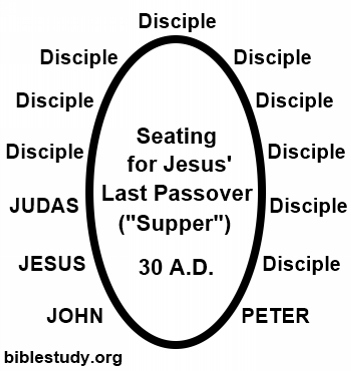
Jesus commanded his disciples (Luke 22:17, 19), and by extension all converted Christians, to commemorate his death once a year. This commemoration should take place at the same time (at sunset that starts Nisan 14) each year with the same symbols he commanded to be used.
7. The devil's request, in the King James translation of Luke 22:31 - 32, makes it seem like he wanted to destroy only the faith of Peter.
And the Lord said, Simon, Simon, behold, Satan hath desired to have you, that he may sift you as wheat: But I have prayed for thee, that thy faith fail not: and when thou art converted, strengthen thy brethren (Luke 22:31 - 32, KJV).
Satan was not asking God to allow him to only "sift as wheat" the apostle Peter. He was asking if God would allow him to tempt (with the goal of destroying) ALL the apostles!
Then the Lord said, "Simon, Simon, listen well. Satan has demanded to have ALL OF YOU (the Greek here is plural), to sift as wheat . . ." (Luke 22:31, HBFV).
Jesus said he prayed for all the disciples not just Peter. He focuses on Peter in Luke 22:32 since he was known for making impulsive and rash statements (which he did in verse 33, see also Matthew 26:33 and John 13:37 - 38).
8. Jesus and his disciples arrive at the Garden of Gethsemane, at the foot of Mount Olivet (Luke 22:39), roughly around 9 p.m. The group will be together while Jesus prays and awaits his arrest.
[Why Did the Disciples Buy Swords?]
9. The "cup" in Luke 22:42 Jesus dreaded to drink from was his Father's wrath against sin. When Christ made his request he was asking that, if it were possible, that he would not have to experience separation from the Father when the sins of the world were placed on him.
The sins of the world were placed on Jesus at or just before 3 p.m. on Wednesday, April 5. God the Father, when he placed our sins on Jesus, had to separate himself from him.
And at the ninth hour, Jesus cried with a loud voice, saying, "Eloi, Eloi, lama sabachthani?" which is, being interpreted, "My God, My God, why have You forsaken Me?" (Mark 15:34, HBFV).
10. It was Jesus, the God of the Old Testament and the Creator of humans, who "kissed" Adam and made his conscious life possible (Genesis 2:7). Humanity, symbolized by Judas, "returned the favor" by using a kiss to betray the Lord into the hands of those who would murder him.
And while He was still speaking, a crowd suddenly appeared, with the one who was called Judas, one of the twelve, going in front of them; and he came near to Jesus to kiss Him.
But Jesus said to him, "Judas, are you betraying the Son of man with a kiss?" (Luke 22:47 - 48).
11. Luke 22:52 - 53 reveals that everything that happened to Jesus was planned and prophesied to occur. The Godhead used the devil, and those he deceived, into fulfilling his great plan of salvation for all humans!
And Jesus said . . . "Have you come out, as against a thief, with swords and clubs? When I was with you daily in the temple, you did not stretch out your hands against Me; but this is your hour, and the power of darkness." (Luke 22:52 - 53).
12. Luke is the only gospel to mention that Jesus turned and looked directly at Peter when the apostle denied he knew him for the third time.
Then the Lord turned and looked at Peter; and Peter remembered the word of the Lord, how He had said to him, "Before the cock crows, you shall deny Me three times." And Peter went outside and wept bitterly. (Luke 22:61 - 62).
13. At around 2 a.m. Jesus was escorted to the house of the High Priest (Luke 22:54). This was the Lord's first trial, which would last about three hours, before Jewish religious leaders.
This first trial was held early so that certain leaders (e.g. Joseph of Arimathea), who might defend Jesus, were not in attendance. This early trial also made it nearly impossible for any witnesses of Jesus' innocence to arrive in time to offer their testimony.
[Why Were Jesus' Trials Illegal?]
It was during this trial that Peter denied three times that he knew Jesus (Luke 22:56 - 61). After the trial ended those guarding the Lord began to mock and beat him. They then enhanced their abuse by blindfolding Christ and hitting him even more, mocking him all the while by asking who it was who struck him (v. 63 - 64).
14. Luke 22:66 - 71 is referencing a second trial of Jesus before Jewish leaders. This trial took place around 5 to 6 a.m. Jewish law demanded two trials be carried out before someone was condemned to die. Although this gathering had more people in attendance than the first trial, it ended up doing nothing more than confirming its sentence.
It is at this second trial delineated in Luke 22 that the Jews officially accused Jesus of blasphemy and therefore worthy of death.
Luke 23 Answers
15. The court carrying out Jesus' first trial declared that the charge against him was a perceived threat that he would destroy Jerusalem's temple.
Then at the last, two false witnesses came forward and said, "This Man said, 'I have the power to destroy the temple of God, and to rebuild it in three days.'" (Matthew 26:59 - 61).
During Jesus' second trial which was before the Sanhedrin, however, the charge against him was changed to blasphemy.
And they all said, "Then You are the Son of God?" And He (Jesus) said to them, "I am that One, as you say." Then they said, "What need do we have of any other witness? For we ourselves have heard from His own mouth." (Luke 22:70 - 71).
The charge against Jesus, however, given to Pontius Pilate was not the threat of destroying the temple or blasphemy. It was something completely different!
And when the entire assembly of them arose, they led Him to Pilate. And they (the religious leaders) began to accuse Him, saying, "We found this man subverting the nation and forbidding to give tribute to Caesar, claiming that He Himself is Christ, a King." (Luke 23:1 - 3, HBFV).
The Jewish religious leaders illegally changed the charge against Jesus so that it would be acceptable to the Roman authorities. While their first two charges would not have justified to Rome he deserved the death penalty, their third charge of treason was a serious crime against the empire.
16. In Luke 23:3 Jesus openly admits that he was born to be a King! This harkens back to shortly after his birth when the Magi proclaimed they traveled to Judea to worship the King of the Jews.
"Where is the One Who has been born King of the Jews? For we have seen His star in the east, and have come to worship Him." (Matthew 2:2).
Jesus, of course, is more than a ruler over the Jews. At his Second Coming he will return to earth as "King of Kings and Lord of Lords" (Revelation 19:16) to reign over the entire earth!
17. Jesus answered the question Pilate asked him in Luke 23:3. He was then sent to Herod Antipas (verses 7 - 10) where he did not answer a single question posed to him (v. 9). When he came back to Pilate he answered the questions he was asked (John 18:33 - 38). After being beaten and scourged by Roman soldiers he yet again answered Pilate (John 19:9 - 11). Why did he answer Pilate but not Herod?
[Why Didn't Jesus Answer Herod?]
When Jesus was before Herod Antipas (Luke 23:7 - 10) he was not on trial for his life. Herod, in fact, was more focused on getting Jesus to perform a miracle on demand than anything else (v. 8).
Herod, though a tetrarch, also did not have the authority of Pilate who was a Roman Prefect (governor). It was Pilate who would have the final say on whether the Lord was condemned or freed, which is why Jesus responded to him.
18. Luke 23 mentions four out of six people who thought Jesus was innocent of the charges against him. These people were Pilate and Herod Antipas (Luke 23:13 - 15), a crucified thief (v. 40 - 41) and a Roman Centurion (v. 47). The other two are Judas Iscariot (Matthew 27:3 - 4) and Pilate's Wife (Matthew 27:19).
19. Jesus, in Luke 23:27 - 31, is primarily referencing the attack and conquering of Jerusalem by Rome from mid-April to early September in 70 A.D. This attack by the Roman army ultimately led to both the city and its glorious temple being destroyed and razed to the ground!
[Attacks on Jerusalem Timeline]
The suffering the Roman army caused those inside Jerusalem was truly horrific! The Jewish historian Josephus stated the following about the famine the city experienced during Rome's seige.
"Then did the famine widen its progress, and devoured the people by whole houses and families; the upper rooms were full of women and children that were dying by famine, and the lanes of the city were full of the dead bodies of the aged;
"the children also and the young men wandered about the market-places like shadows, all swelled with the famine, and fell down dead . . ." (Wars of the Jews, chapter 12, section 3).
20. John 19:23 - 24 states that four Roman soldiers divided up Jesus' clothes amongst themselves. When they came to his coat (tunic) they saw it was a quality garment that was woven from top to bottom in one piece (as opposed to pieces stitched together). Ripping it apart to divide it up would have caused frayed pieces that were pretty much worthless.
[Why Did They Cast Lots
for Jesus' Clothes?]
The soldiers decided to keep Jesus' quality coat intact and to decide who received it through chance (the casting of lots, see also Matthew 27:35 and Mark 15:24). This is what Luke 23:34 is referencing.

The dividing of Jesus' clothes and the casting of lots, mentioned in Luke 23:34, also fulfilled a Biblical prophecy.
They divide My garments among them and cast lots upon My vesture (Psalm 22:18).
21. Luke 23:38, in the King James Bible, states the following was written above Jesus' head as he was being crucified.
And a superscription also was written over him in letters of Greek, and Latin, and Hebrew, THIS IS THE KING OF THE JEWS (Luke 23:38, KJV).
The other three gospels record the following.
And set up over his head his accusation written, THIS IS JESUS THE KING OF THE JEWS (Matthew 27:37, KJV).
And the superscription of his accusation was written over, THE KING OF THE JEWS (Mark 15:26, KJV).
And Pilate wrote a title, and put it on the cross. And the writing was, JESUS OF NAZARETH THE KING OF THE JEWS (John 19:19, KJV).
Greek, Latin and Hebrew were the chief languages spoken in Judea.
22. The belief that the thief being crucified next to Jesus was offered immediate entrance into heaven is due to a simple punctuation error in the King James!
And he said unto Jesus, Lord, remember me when thou comest into thy kingdom. And Jesus said unto him, Verily I say unto thee, To day shalt thou be with me in paradise (Luke 23:42 - 43, KJV).
The original Greek language used to write the New Testament did not have punctuation marks as we do today. Translators placed a comma before the words "To day" in Luke 23:43 to clarify, they thought, the sentence's meaning. Instead, their punctuation placement gives the false impression that Jesus, and the thief, entered heaven on the day the Lord died.
A correct translation of Luke 23:42 - 43 is the following.
Then he said to Jesus, "Remember me, Lord, when You come into Your kingdom." And Jesus said to him, "Truly, I tell you today, you shall be with Me in paradise" (Luke 23:42 - 43, HBFV).
The thief did not enter heaven upon his death. He, like countless others, is unconscious and awaiting the second resurrection where he will be given a full chance at salvation. Jesus made the statement he did because he knew the man's attitude would insure his conversion and eventual acceptance into God's kingdom.
Jesus also did not enter heaven after he died. He was dead, completely unconscious, for three complete days (72 hours) as he prophesied (Matthew 12:40, 27:63, Mark 8:31, John 2:19). He did not go to heaven until Sunday morning in fulfillment of the Wave Sheaf offering.
23. Luke 23:44 says that as Jesus was being crucified that darkness covered the land from the sixth to ninth hour. The sixth hour was noon while the ninth hour was 3 p.m. It was at 3 p.m. on Wednesday, April 5 in 30 A.D. that Jesus finally died.
[Why Did Jesus Refuse to
Drink Wine Mixed with Gall?]
And after crying out with a loud voice, Jesus said, "Father, into Your hands I commit My spirit." And when He had said these things, He expired (Luke 23:46, HBFV).
24. The seemingly unrelated event of the temple veil being split in two when Jesus died is recorded in all four gospels (Matthew 27:51, Mark 15:38, Luke 23:45 and John 19:38). The significance of this event, however, cannot be overstated!
The temple veil mentioned in Luke was a thick and heavy curtain that separated the temple's Holy of Holies from the Holy Place. The Holy of Holies, at one time, housed the Ark of the Covenant. It symbolized the presence of God and could only be entered once a year, by the High Priest, on the Day of Atonement (Yom Kippur).
[Does the Ark of the Covenant Still Exist?]
The splitting of the veil from top to bottom was a miraculous event that only God the Father could have performed. Its occurrence, at the moment of Jesus' death, symbolized the perfect "splitting" of Jesus' body and blood (Hebrews 10:19 - 20) necessary for the forgiveness of all sins. It also signaled that humanity now had direct access to God, at any time, through Jesus' perfect sacrifice as the Lamb of God (John 1:29, 1Peter 1:19, Revelation 5).
25. Joseph of Arimathea (Luke 23:51) was a wealthy member of the Sanhedrin, the supreme religious council of the Jews. Luke 23:50 calls him a "good and righteous man" who did not agree with the council's decision to hand Jesus over to the Romans for execution.
It was Joseph who boldly requested Jesus' dead body from Pilate (Luke 23:52). After receiving the body both he and Nicodemus wrapped it and placed it in a new garden tomb Joseph owned (John 19:38 - 42). Jesus' burial in the tomb of a rich man fulfilled Biblical prophecy (Isaiah 53:9).
As for Arimathea, there is still debate as to where it was located. It was a city of Judea (Luke 23:51) which was likely northwest of Jerusalem.
26. The time sequence of Luke 23:52 - 56 can be explained with some basic info on God's annual Holy (Feast) days.
[Passover and Feast
of Unleavened Bread]
Although Passover is the first of God's annual Feast days, it is not a high holy day where work was forbidden. In the year Jesus died, 30 A.D., it ran from sunset on April 4 (Tuesday), when Jesus kept his last Passover, to sunset the following day (April 5). Biblical days begin and end at sunset.
Because work is allowed on Passover, its day portion (in this case Wednesday) was used to complete preparation for the Feast of Unleavened Bread. This feast, which began at sunset Wednesday in 30 A.D., is a seven-day festival where leaven must be removed from the home before it is celebrated (Leviticus 23, Numbers 28:16 - 18).
Joseph of Arimathea (and Nicodemus) hurried to get, wrap and bury Jesus' body before sunset Wednesday (April 5) when no work could be performed. The next time work would be allowed was after the first day of unleavened bread ended at sunset Thursday (April 6). In the year Jesus died, work could then be carried out from sunset Thursday to sunset Friday.
It was on the daytime part of Friday (April 7) that the unnamed women of Luke 23:56 prepared spices for Jesus' body. It was then at sunset, which began the Biblical seventh-day Sabbath, that they rested.
27. Luke 23:53 merely says the tomb Jesus was buried in was "hewn in a rock." It was a new tomb in which no one had ever been laid.
[Where is the Garden of Gethsemane?]
The Apostle John reveals Jesus was buried in a tomb, found in a garden, which was near where the Lord was crucified (John 19:41). Matthew and Mark then mention that the tomb came with a heavy stone door that could be rolled into place for protection of the burial site (Matthew 27:60 and Mark 15:46).

Given the Biblical criteria already mentioned, the likely location of Jesus' burial is the Garden Tomb (also known as Gordon's tomb, shown above) located outside the walls of Jerusalem. The place where Jesus was likely crucified, called Golgotha, Calvary and the Place of the Skull, is located about 100 yards (91.4 meters) east of the Garden Tomb.
Luke 24 Answers
28. Luke 24:1 mentions "the first day of the weeks" (the King James erroneously calls it the "first day of the week). It is called the first day of WEEKS since it is the first day of the seven weeks count to Pentecost. This day is also the Wave Sheaf offering day which always occurs on the Sunday during the Feast of Unleavened Bread.
[Did Jesus Delay His Ascension?]
The sheaf that would be ultimately waved before God was the first fruits of the spring harvest season. Israelites were not allowed to begin their harvest of the land until after this special sheaf was cut and presented to God (Leviticus 23:14). The sheaf itself was cut at the end of the weekly Sabbath (sunset Saturday). It was then, on Sunday, waved before God at Jerusalem's temple around 9 a.m.
29. A furlong was roughly 1/8th of a mile (201.2 meters). Emmaus, mentioned in Luke 24:13, was sixty furlongs (7.5 miles or 12 kilometers) from Jerusalem. It is located west of the city.
[What Does the Word Emmaus Mean?]
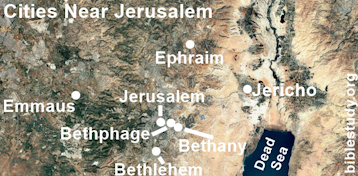
30. Luke 24:20 reveals that it was commonly known that Jesus' death was instigated by the Jewish religious leaders. They are the ones who wanted the Lord dead but had to convince the Roman authorities to do their "dirty work" for them.
31. Luke 24:26 - 27 records, yet again, Jesus correcting the misconception that the Messiah would first appear on earth as a conquering King. He would, instead, come as a suffering servant to die for the sins of humanity.
"Was it not necessary for the Christ to suffer these things, and to enter into His glory?" And beginning with Moses, and from all the prophets, He interpreted to them the things concerning Himself in all the Scriptures (Luke 24:26 - 27).
[Who Are the Least in God's Kingdom?]
[Why Do Animals Symbolize Kingdoms?]
The concept of Jesus coming as a King to free his people from the Romans and rule the earth was deeply ingrained in his disciples. The Lord, even on the day of his ascension, had to correct the expectation he would inaugurate his kingdom.
So then, when they (Jesus and the disciples) were assembled together, they asked Him, saying, "Lord, will You restore the kingdom to Israel at this time?" And He said to them, "It is not for you to know the times or the seasons, which the Father has placed in His own authority . . ." (Acts 1:6 - 7).
32. Luke 24:36 - 48, which took place just before sunset on Sunday, April 9 (John 20:19), is the first time Jesus showed himself alive to those who attended his last Passover meal. His miraculous manifestation occurs while the disciples are behind closed doors in fear of the Jews. For reasons unknown, the disciple named Thomas was not with the group at this time (John 20:24).
[Jesus' Ministry After His Resurrection!]
33. Luke 24:44 says the following.
And He said to them, "These are the words that I spoke to you when I was yet with you, that all the things which were written concerning Me in the Law of Moses and in the Prophets and in the Psalms must be fulfilled." (Luke 24:44).
Jesus reveals in Luke 24 that the Old Testament was divided up into three broad sections. The first is God's law, the second are the writings of the prophets, and the third are the Psalms.
[Timeline of the Minor Prophets]
God's law, the first section, includes the books of Genesis, Exodus, Leviticus, Numbers and Deuteronomy. The second section, the Prophets, is composed of Joshua, Judges, both parts of Samuel and Kings, and the major prophets Isaiah, Jeremiah and Ezekiel. It also has the twelve writings of the Minor Prophets.
The third section, the Psalms, is composed of the Psalms, Proverbs, Job, Song of Solomon, Ruth, Lamentations, Ecclesiastes, Esther, Daniel, Ezra, Nehemiah, and both parts of Chronicles.
34. Luke 24:1 - 48 covers the period from early Sunday morning (April 9 in 30 A.D.) until past sunset of the same day. There is a gap of time, however, between Luke 24:48 and verse 49 to the end of the chapter.
Luke 24:49 - 53 covers what Jesus said and did on the day he ascended into heaven (see Acts 1). His ascension took place on Thursday, May 18, thirty-nine days after his first appeared to his disciples after his death.
Luke 1 to 6 Outline - 7 to 12 Outline
13 to 18 Outline - 19 to 24 Outline
1 to 5 Questions - 6 to 10 Qs - 11 to 15 Qs
16 to 20 Qs - Luke Facts Part 1 - Part 2