Luke 7 to 12 Outline
Chpt. 7: Jesus' Sermon on the Mount (Luke 6:20 - 49) was given a brief time after Pentecost in 27 A.D. The first verse of this chapter records the end of Jesus' discourse after which he went to Capernaum. Verse 2, however, picks up events in his ministry that begin between Mid-April to Early Summer in 28 A.D.
[Timeline of Jesus' Life and Ministry]
The Lord, after leaving Capernaum, is asked to travel to heal a Roman centurion's servant who is near death. The centurion's unusual faith in Jesus' authority, however, not only impresses the Lord but causes him to stop his journey! After commenting about the man's unique belief in his authority the servant is healed (Luke 7:2 - 10).
Jesus, while entering a city called Nain, takes pity on a widow who lost her only son. His compassion and love lead to the son being resurrected from the dead (Luke 7:11 - 18).
[Why Did John the Baptist Doubt Jesus?]
John the Baptist sends some of his disciples to express doubts concerning Jesus being the prophesied Messiah. The disciples, after seeing many miracles, are told to return to John and report what they heard and saw. Jesus, after they leave, then informs the crowd with him that John was the messenger prophesied to come in Malachi 3 (Luke 7:18 - 28).
The Pharisees and doctors of the law, who are listening to Jesus, are compared to little children who are never satisfied and always upset (Luke 7:30 - 35).
[What Did the Pharisees Believe?]
The Lord is then invited to have dinner at a Pharisee's house. The religious leader, in his heart, soon begins to look down on him because he allowed an unknown female sinner to wash and anoint his feet. Jesus, who knows what the man is thinking, corrects him by saying the woman lovingly provided the basic courtesies of a host that the Pharisee refused to perform (Luke 7:36 - 50)!
Chpt. 8: Chapter 8 of Luke opens with mentioning several women not only followed Jesus on his travels but also financially supported his ministry (v. 1 - 3). The Lord then gives the parable of the Sower (v. 4 - 15) and teaches believers are to be like lights to those around them (v. 16 - 17).
[Jesus' Genealogy Through Mary]
Luke then reveals the names of Jesus' half-brothers (James, Joses, Simon and Judas (Jude)) and informs us he had at least two half-sisters (v. 19 - 21). The disciples, while sailing the Sea of Galilee during rough weather, begin to panic. They reluctantly seek the Lord's help by waking him and are chastised for their lack of faith (v. 22 - 25).
Landing in an area known as the Gadarenes, the Lord is confronted with a demonically-possessed man with superhuman strength. The demons are cast out of the person and allowed to enter a large herd of pigs. The swine respond by running headlong down a steep slope and drowning in a lake (Luke 8:26 - 39)!
[Best Bible Verses About Healing!]
A synagogue ruler named Jairus begs Jesus to heal his ailing twelve-year old daughter. While traveling to visit the child a woman suffering from a hemorrhage of blood touches Jesus' clothes and is healed. Although the Lord is then informed the girl has died he still travels to her home and resurrects her from the dead (Luke 8:41 - 56)!
[What Were Jesus' Synagogue Miracles?]
Chpt. 9: Luke 9 begins by Jesus sending his twelve disciples on an evangelistic training mission. Their goal is to preach the Kingdom of God and to confirm their word by healing the sick and casting out demons (v. 1 - 6).
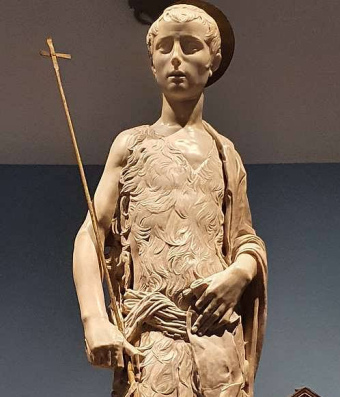
Luke records that Herod Antipas, after imprisoning John the Baptist for a little less than two years, has him beheaded. His murder takes place at Herod's birthday celebration (v. 7 - 9).
In Bethsaida, after a full day of preaching the gospel, Jesus feeds more than 5,000 people by miraculously multiplying five loaves and two fish (Luke 9:10 - 17).
Jesus quizzes the disciples about who do the people think he is. He then asks them who do they think he is, and Peter proclaims he is the Christ (Luke 9:18 - 22). After foretelling his own death, the Lord warns that those who follow him must deny themselves daily (v. 23 - 26).
What is known as the transfiguration takes place near Mount Hermon. The transfiguration, which is Jesus' miraculous manifestation of his glory, is seen by Peter, James and John (Luke 9:27 - 36). After this event the Lord casts a demon out of a child that his disciples were unable to dislodge (v. 38 - 43).
Taking a little child, Jesus teaches that those who wish to be great in the Kingdom of God must be humble (like a child) and willing to serve everyone (Luke 9:46 - 48). The Lord then sends his disciples ahead of him as he travels south through Samaria. James and John soon earn a rebuke for wanting to destroy with fire those who reject Jesus passing through their villages (v. 51 - 56).
Luke closes the chapter by reiterating Jesus' teaching that the Kingdom of God must be a person's greatesy priority in life (Luke 9:57 - 62).
[When Were the Gospels Written?]
Chpt. 10: Luke 10 begins with Jesus sending out 70 of his disciples on an evangelistic training mission. This group, which does not include the twelve apostles, is sent out between mid-November and late December of 29 A.D. (Luke 10:1 - 16). After they return the Lord reveals he saw Satan the devil ejected like lightening from God's throne (v. 18).
[Who Were the Seventy Jesus Trained?]
A certain Jewish religious leader, wanting to entrap Jesus, asks him what must he do to inherit eternal life. After answering his own question he asks who does God state is his neighbor. The Lord answers the man with the good Samaritan parable (Luke 10:25 - 37).
Luke closes the chapter with Jesus and the disciples traveling to Bethany where the Lord is the dinner guest of Mary, Martha and Lazarus (Luke 10:38 - 42).
Chpt. 11: Luke 11 begins with Jesus giving his disciples an outline on how to pray to God the Father (v. 1 - 4). He then teaches that believers ought to be persistent in prayer and not give up (v. 5 - 13).
[What Does the Lord's Prayer Mean?]
[What Are the Three Answers to Prayer?]
The Lord, after casting out a demon, is accused by those who hate him of doing so through the power of Beelzebub (the devil). Jesus' response is to point out that such reasoning makes no sense whatsoever. He also highlights that it is foolish to criticize his casting out of demons when his accusers cannot do so themselves (Luke 11:14 - 22)! Jesus then reveals it is entirely possible that demon possession can grow worse (v. 24 - 26).
[Why Is the Devil Still Alive?]
Near the middle of Luke's chapter Jesus declares the only sign to be given to prove he is the Messiah is the sign of Jonah. This sign entails him being dead and unconscious for three complete days (72 hours) before being resurrected from the dead (Luke 11:29 - 32).
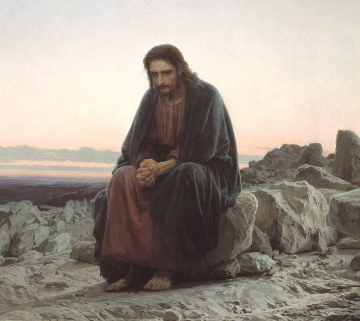
Jesus then enters a lengthy discussion about the Pharisees (plus other Jewish leaders) and their worthless obsession with purely ritualistic tasks. He also takes issue with their narrow focus on God's law which scrupulously keeps part of it while neglecting the weightier matters of mercy, forgiveness and love.
The hypocritical behavior of the religious leaders, according to the Lord, have rendered them dead on the inside. Their unwillingness to repent, Luke reveals, will ultimately lead to God's judgment upon them (Luke 11:37 - 52).
[Why Are There Only Four Gospels?]
Chpt. 12: Luke starts chapter 12 with Jesus warning his disciples against the "leaven" of the Pharisees which is hypocrisy (v. 1 - 3). He also teaches not to be afraid of what humans can do to them but rather to rightfully fear God who has the power to kill them for all eternity (v. 4 - 9).
After briefly mentioning the unpardonable sin (Luke 12:10), the Lord warns against covetousness by giving the parable of the wealthy man who built bigger barns (v. 13 - 21). Jesus then promises that God will take care of those who whole-heartedly pursue the kingdom (v. 22 - 31).
Christians are charged to diligently watch for Jesus' second coming and be prepared for it by constantly doing good. Those who refuse to be prepared despite knowing of Jesus' return, or who didn't know of his return but still disobeyed, will someday be punished (Luke 12:36 - 48).
[Why Didn't Jesus Bring Peace?]
[Did Angels Proclaim Peace on Earth?]
Luke begins to close the chapter by relaying Jesus' warning that he did NOT come to the earth (at that time) to bring peace. Believing and obeying the Lord comes with consequences. Those who are true Christians should not be surprised if their behavior and beliefs are not only misunderstood but lead to divisions in their families (Luke 12:51 - 53).
Luke 12 ends with Jesus warning that its best to be reconciled with our adversaries before going to court else we risk paying an even higher price (v. 57 - 59).
Luke 1 to 6 Outline - 13 to 18 Outline
19 to 24 Outline - Luke 1 to 5 Questions
6 to 10 Qs - 11 to 15 Qs - 16 to 20 Qs
21 to 24 Qs - Facts Part 1 - Part 2