Luke 13 to 18 Outline
Chpt. 13: Luke opens chapter 13 with Jesus' teaching that misfortunes that happen to people are generally not caused by God punishing them for some sin. Time and chance can happen to anyone (Luke 1:1 - 4). The parable of the fig tree is then given to underscore God's expectation that a person's repentance should produce fruit (obedience and good works) (v. 6 - 9).
Jesus, on the Sabbath day, heals a woman while he is attending synagogue. The synagogue's ruler, due to his faulty understanding of God's law, becomes angry with the Lord. The ruler believed the act of healing was work that was prohibited on the day. Jesus' response was to point out the hypocrisy of such a belief (Luke 13:10 - 17).
The parables of the mustard seed and leaven are given to illustrate an important characteristic of God's kingdom (Luke 13:18 - 21). Jesus then teaches that being in his presence and believing in him is NOT enough to have a relationship with him (v. 24 - 27)!
[Why Is There Sin and Suffering?]
The Pharisees try to scare the Lord by warning him that Herod wants him dead. Jesus' response was that he would continue his mission until it was completed (Luke 13:31 - 33). He then mourns for Jerusalem because he knows it will soon be destroyed (v. 34 - 35).
Chpt. 14: Luke 14 begins with Jesus at the home of a Pharisee for a Sabbath meal. Before he heals a man of dropsy he asks if the leaders believe it is lawful to heal on the Sabbath. Their lack of a response means they have no excuse to complain after the man is healed (v. 1 - 6).
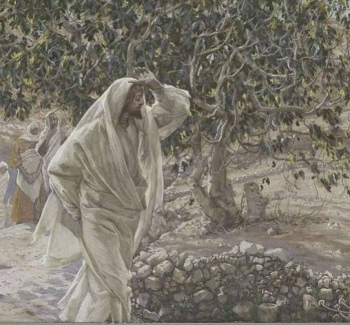
The Lord then offers the parable of the wedding feast (Luke 14:7 - 11). It is meant to teach that humility is highly prized by God (v. 11). Jesus also teaches the religious leaders that godly generosity involves helping the less fortunate and not just those who can return their favor (v. 12 - 14).
[Poverty and the Poor in Proverbs]
The parable of the great supper is then given to stress the importance of obeying God and pursuing his kingdom above all else (Luke 14:16 - 24).
Jesus follows this up his parable by teaching that those who wish to follow him must be willing to pay the highest cost. They must be ready to place their belief and obedience to God as more important than their familial relationships. They also must be willing to "carry their cross" for the sake of the kingdom of God (Luke 14:25 - 33).
[Why Did Jesus Teach Using Parables?]
Luke 14 closes with the teaching that Christians are expected to perform good works that make a noticeable difference in the world. They are to be the "salt" or flavor that makes life a little bit better (v. 34 - 35).
Chpt. 15: Luke 15 starts with the parable of the lost sheep. It illustrates God's love for individuals and his willingness to do whatever it takes to save them (Luke 15:1 - 7). This point is further enhanced by the parable of the lost coin (v. 8 - 10).
[Meaning of Prodigal Son Parable]
Jesus then offers the famous parable of the prodigal son. It symbolizes sinners in general who, after living a riotous life, realize that they have done wrong. When they finally repent they are rejoiced over in heaven (Luke 15:11 - 32).
Chpt. 16: Luke 16 begins with the parable of the unjust steward. This parable is meant to teach the principle that we should strive to wisely and honestly use our material wealth to gain spiritual benefits (Luke 16:1 - 9).
[Parable of the Unjust Steward]
Jesus follows the unjust steward parable by teaching that humans cannot dedicate themselves to both the Kingdom of God (eternal wealth) and the pursuit of money (Luke 16:13). Jesus then clearly says that God's laws were not only in effect during his life, they would also continue to be so into the future (v. 17)!
[Rich Man and Lazarus Parable]
The Pharisees, who loved money, heard Jesus' teaching about it and openly ridiculed him (Luke 16:14). The Lord's response was to offer his well-known parable of the rich man and Lazarus (v. 19 - 31).
[Which Old Testament Laws
Should We Keep?]
Chpt. 17: Luke 17 opens with Jesus warning his disciples to be sensitive to those new in the faith ("little ones") and not do anything that could cause them spiritual harm or lead them to sin (Luke 17:1 - 2). He also instructs them to quickly confront a sinning brother and forgive him as many times as needed (v. 3 - 4).
The Lord teaches that those who only fulfill the basic responsibilities of a Christian will be considered unprofitable servants (Luke 17:7 - 10). He will later teach how a believer can not only earn praise from God but also be profitable to him (chapter 19)!
Jesus, traveling south with his disciples through Samaria, runs into ten men who beg to be healed of their leprosy. Sadly, after they are healed, only one of them (a "hated" Samaritan) comes back to thank the Lord and praise God (Luke 17:11 - 19).
The Pharisees demand to be told when the Kingdom of God (the reign of God) would come. Jesus’ response was that their focus was wrong as it was based on seeing an outward manifestation of pomp or greatness. The Kingdom is spiritual and must be understood spiritually. Their deceived hearts kept them from understanding that the Kingdom was already among them in the form of its ruler, Jesus, the King of Kings (Luke 17:20 - 21).
[Timeline of Man's Last Days!]
Luke closes the chapter with Jesus' warning that his Second Coming will come as a complete shock to the world (Luke 17:26 - 37)!
Chpt. 18: Luke 18 begins with the parable of the unjust judge. Its purpose is to teach believers to be patient, persistent and bold in their prayers as this avails much with God (Luke 18:1 - 8). The parable of the Pharisee and the tax collector is then given to address those who thought they were righteous but despised others (v. 9 - 14).
The Lord then uses his example of blessing little children to teach that a child-like humility and willingness to believe what they are told are essential traits in God's kingdom (Luke 18:16 - 17).
Jesus then runs into a ruler wishing to know how to inherit eternal life. The Lord, after listing some of the ten commandments, tells the man he also must give up the riches that had become more important to him than God. The ruler, sadly, declined to give up his wealth. The parable of the camel and the needle is then given to illustrate the difficulty humans have in giving up worldly riches (Luke 18:18 - 27).
[Camel through Eye of a Needle Parable]
[Prophecies Fulfilled When Jesus Died]
The Lord reveals that the group's upcoming entrance in Jerusalem will ultimately lead to the fulfillment of countless prophecies concerning him. The disciples, however, were at the time unable to understand the meaning of what they were told (Luke 18:31 - 34).
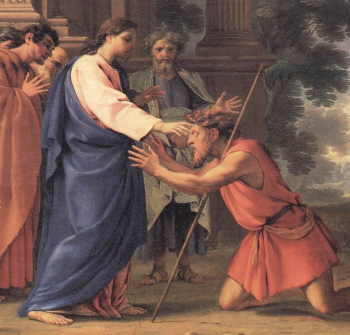
Jesus, as the group nears Jericho, heals a blind man who loudly begged for his mercy (Luke 18:35 - 43).
Luke 1 to 6 Outline - 7 to 12 Outline
19 to 24 Outline - Luke 1 to 5 Questions
6 to 10 Qs - 11 to 15 Qs - 16 to 20 Qs
21 to 24 Qs - Facts Part 1 - Part 2